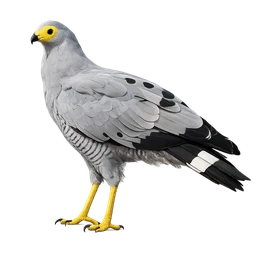
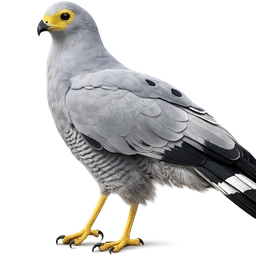
Profile
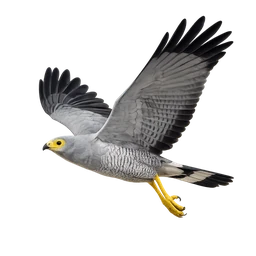
In flight
Birds of Prey
African Harrier-Hawk
Polyboroides typus
- uncommon
- 67 km/h
- Least Concern
Has double-jointed knees that bend both ways, letting it reach into tree holes and cliff crevices for prey.
- Habitat
- Woodland, forest edge, savanna, riparian gallery forest, and cultivated/agricultural land, often near water, from sea level up to ~3000 m; tolerates partially deforested/urban areas but avoids dense continuous rainforest
- Fun fact
- The African Harrier-Hawk has unusually double-jointed, flexible ankle (intertarsal) joints that let it bend its long bare legs backward and sideways, reaching deep into tree holes and crevices to extract eggs and nestlings that other raptors cannot access — a convergent adaptation also seen in the unrelated Neotropical crane hawk and the extinct Australian raptor Pengana.
- Range
- Widespread across sub-Saharan Africa (two subspecies: P. t. typus in the west/central range from Senegambia to W Sudan, S to DR Congo and NW Angola; P. t. pectoralis from E Sudan/Eritrea through East Africa to Angola and South Africa); absent from dense continuous rainforest interior and the driest desert regions (e.g. much of Namibia and Botswana)
- Diet
- Omnivorous opportunist — raids tree cavities/crevices for eggs and nestlings of hole-nesting birds (e.g. barbets, woodhoopoes), and also takes small mammals, reptiles, amphibians, bats, insects, and oil-palm fruit
- Size
- 0.63 m
- Wingspan
- 1.4 m