Profile
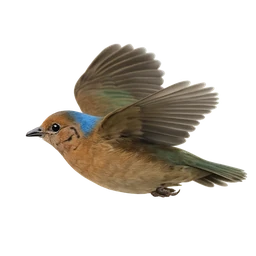
In flight
Pittas
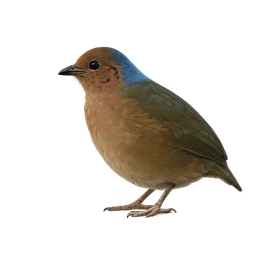
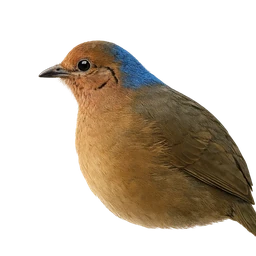
Blue-naped Pitta
Hydrornis nipalensis
- uncommon
- 32 km/h
- Least Concern
Skulks in Himalayan ravines with a flashing blue nape and a habit of vanishing the moment you spot it.
- Population
- Global population size not numerically quantified by BirdLife/IUCN; qualitatively described as ranging from locally very abundant (e.g. Louang, Laos) to rare (e.g. northeastern Bangladesh); overall population trend is decreasing (suspected decline of 1-19% over the past decade, linked to ~17.9% tree cover loss within its range)
- Habitat
- Subtropical/tropical moist lowland forest (major habitat) plus subtropical/tropical moist montane forest, swamp forest, and degraded former forest, including bamboo jungle; medium forest dependency; elevation range 0-1,500 m; a shy, terrestrial forest-floor species
- Fun fact
- Unlike most Hydrornis pittas, the Blue-naped Pitta shows clear head dimorphism between sexes: males have a bright blue hindcrown, nape and hindneck, while females show a reddish-brown hindcrown and a green hindneck instead.
- Range
- Resident, non-migratory, across 8 countries: Nepal, Bhutan, India (northeast), Bangladesh (northeast), China (mainland, south), Myanmar, Laos, and Vietnam, spanning the eastern Himalayas into parts of Southeast Asia; Extent of Occurrence approximately 1,620,000 km²
- Diet
- Ground-dwelling insects, worms, and other small invertebrates and small animals foraged from the forest floor and leaf litter
- Size
- 0.235 m