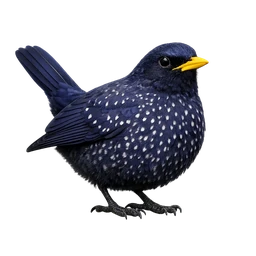
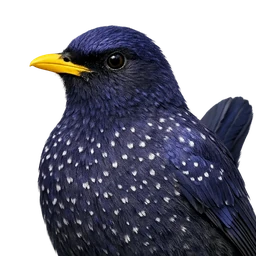
Profile
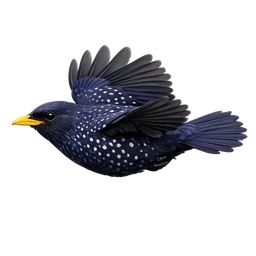
In flight
Songbirds
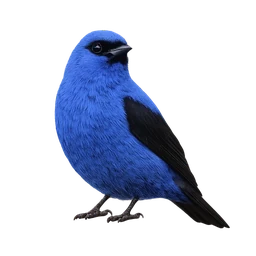
Blue Whistling Thrush
Myophonus caeruleus
- rare
- 38 km/h
- Least Concern
Haunts mountain streams across Asia, whistling melodies so human-like that travelers have mistaken it for a person.
- Population
- Global population size unquantified (BirdLife/IUCN 2024 assessment describes it as "common but thinly spread," with a suspected decline of 1–19% over three generations, best estimate under 5%, driven by ~4.6% forest loss in its range); regional counts: roughly 100–100,000 breeding pairs in China and 100–10,000 pairs in Taiwan
- Habitat
- Temperate and subtropical/tropical moist montane forests, typically along fast-flowing rocky streams and ravines at 1,000–4,000 m elevation; an altitudinal migrant that descends to lower elevations in winter
- Fun fact
- The Blue Whistling Thrush is the largest member of the Old World flycatcher family Muscicapidae and is famous for its loud, human-like whistling song delivered at dawn and dusk.
- Range
- Widespread across montane Asia from Afghanistan and Central Asia (Tajikistan, Turkmenistan, Kazakhstan) through the Himalayas (Pakistan, India, Nepal, Bhutan, Bangladesh) to China, Tibet, Myanmar, Thailand, Laos, Cambodia, Vietnam, Malaysia, and Indonesia — roughly 20 countries/territories, EOO ~21.8 million km² (breeding)
- Diet
- Omnivorous forager taking fruits, earthworms, insects, crabs, and snails; often smashes snails and crabs against rocks before eating, and occasionally takes small vertebrates such as mice or smaller birds
- Size
- 0.32 m
- Lifespan
- 15 years