Profile
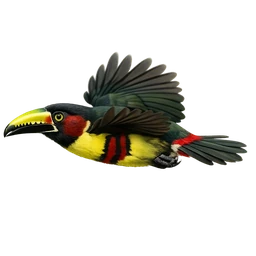
In flight
Toucans & Aracaris
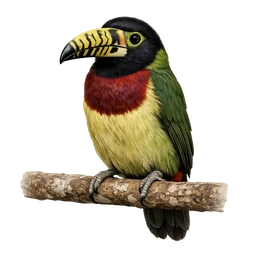
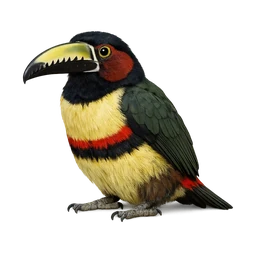
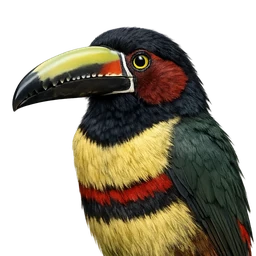
Chestnut-eared Aracari
Pteroglossus castanotis
- epic
- 40 km/h
- Least Concern
Named for chestnut cheeks, but the red belly band crossing yellow underparts is the real signature. Roosts in tree holes.
- Population
- Global population size not quantified; described as common, with a suspected decreasing trend (est. 1-19% decline over three generations, linked to ~9.1% tree-cover loss in range)
- Habitat
- Wet forest by lakes and rivers, várzea, swamp and gallery forest, forest edges and clearings, bamboo canebrakes and cerrado, plus disturbed habitats such as plantations; mostly below 600 m (locally to 1,300-1,600 m in Andean foothills)
- Fun fact
- Despite its toucan-like bill, the chestnut-eared aracari nests in old woodpecker holes that it enlarges as needed, breeds cooperatively in family groups, and forages hanging upside down to reach fruit at branch tips.
- Range
- Western and southern Amazon Basin and beyond: Colombia, Ecuador, Peru, and western Brazil (nominate subspecies) south through Bolivia, Paraguay, south-central/southeastern Brazil, and northeastern Argentina (subspecies australis); extent of occurrence ~7,070,000 km2
- Diet
- Mostly fruit, plucked from branches (including while hanging upside down) or probed from vines, shrubs, crevices and cavities; also flowers, nectar, bird eggs, and nestlings
- Size
- 0.45 m