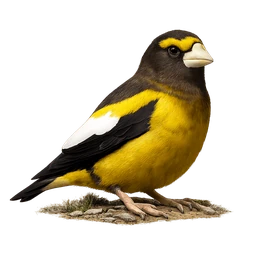
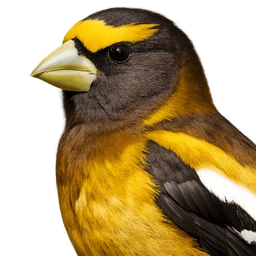
Profile
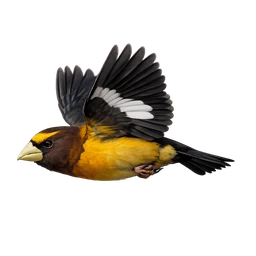
In flight
Songbirds
Evening Grosbeak
Hesperiphona vespertina
- uncommon
- 40 km/h
- Vulnerable
Cracks sunflower seeds with a beak built for industrial work. Mass-mailing in canary yellow.
- Population
- ~3.8 million (global, Partners in Flight estimate); eastern North American populations have declined heavily since the 1970s-80s for poorly understood reasons
- Habitat
- Coniferous and mixed forest (spruce-fir in the north, pine in western mountains) during breeding; deciduous groves, semi-open woodland, box-elder/maple stands, fruiting shrubs, and feeders in winter
- Fun fact
- Despite its name, the Evening Grosbeak is vocal and active throughout the day — early naturalists mistakenly believed it sang mainly at dusk.
- Range
- Breeds across boreal Canada and the western mountainous US into Mexico, having expanded east to New England and the Maritimes in the late 1800s-early 1900s; winters irruptively and unpredictably south into the US; rare vagrant to the British Isles
- Diet
- Seeds (especially box elder, ash, maple, and locust), tree buds, berries, small fruits, maple sap, and weed seeds; readily takes sunflower seeds at feeders; supplements diet with insects (including spruce budworm caterpillars) and mineral-rich grit/gravel in breeding season
- Size
- 0.19 m
- Wingspan
- 0.33 m
- Lifespan
- 16 years