Profile
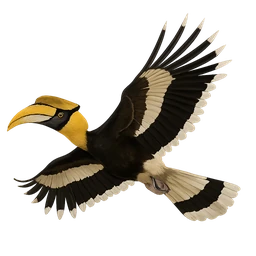
In flight
Tropical Birds
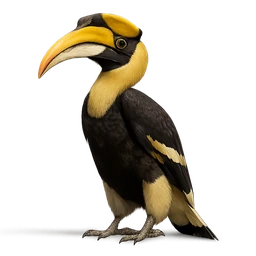
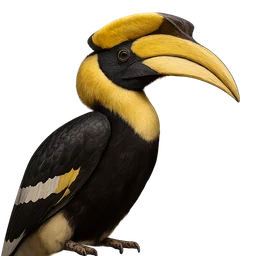
Great Hornbill
Buceros bicornis
- uncommon
- 32 km/h
- Vulnerable
Massive casque on its head and booming wingbeats you can hear a mile away.
- Population
- 13,000-27,000 mature individuals, decreasing
- Habitat
- Dense, unlogged wet evergreen and mixed deciduous forests, from lowland elevations up to ~2,000 m, with a strong preference for old-growth forest containing large trees for nesting cavities
- Fun fact
- During breeding (Jan-Apr), the female seals herself inside a tree-cavity nest using a plaster made mainly of feces (and other material), leaving only a narrow slit through which the male feeds her and the chicks until they are half-developed; the chicks reseal the cavity themselves after the female exits.
- Range
- South and Southeast Asia across 12 countries: India, Nepal, Bhutan, Bangladesh, China (mainland), Myanmar, Thailand, Laos, Vietnam, Cambodia, Malaysia, and Indonesia (Sumatra); distribution now fragmented due to deforestation
- Diet
- Primarily frugivorous (figs especially important, including lipid-rich fruits); also opportunistically eats small mammals, reptiles, small birds, and insects
- Size
- 1.2 m
- Wingspan
- 1.52 m
- Lifespan
- 35 years