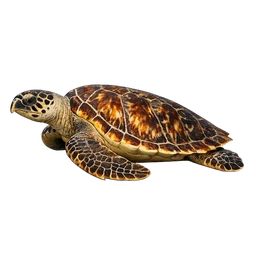
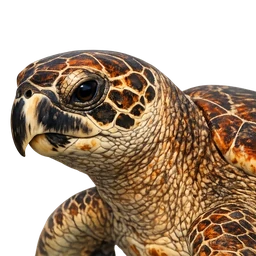
Profile
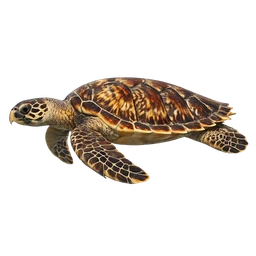
In flight
Turtles
Hawksbill Sea Turtle
Eretmochelys imbricata
- rare
- 10 km/h
- Critically Endangered
Critically endangered. Its narrow hawk-like beak is the only tool that can extract sponges from tight reef crevices.
- Population
- No precise current worldwide total is published; estimated decline of ~80% over the last 100-135 years (roughly three generations), with only a handful of major nesting rookeries remaining (e.g. ~2,000/yr in Australia, 6,000-8,000/yr in Solomon Islands, ~2,000/yr in Indonesia per NOAA)
- Habitat
- Tropical and subtropical coral reefs, rocky shoals, and shallow lagoons, plus mangrove-fringed bays and estuaries; hatchlings and juveniles live pelagically among floating Sargassum/algal mats before settling on reef habitat
- Fun fact
- Hawksbills are the only sea turtle species that feeds mainly on sponges, many of which are toxic to other animals, and by cropping them from reefs they help keep coral surfaces clear for other reef life to thrive.
- Range
- Circumtropical: nearshore waters of the Atlantic, Pacific, and Indian Oceans (three recognized subpopulations: Atlantic, Indo-Pacific, Eastern Pacific), with nesting beaches from the Caribbean and Brazil to East Africa, the Middle East, South/Southeast Asia, and northern Australia
- Diet
- Primarily sponges (spongivorous, ~70-95% of diet), supplemented by sea anemones, jellyfish, other cnidarians, mollusks, crustaceans, small fish, and algae
- Size
- 0.9 m
- Lifespan
- 50 years