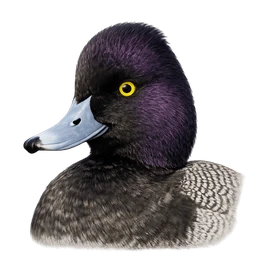
Profile
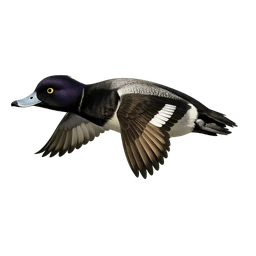
In flight
Waterfowl
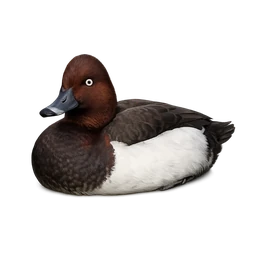
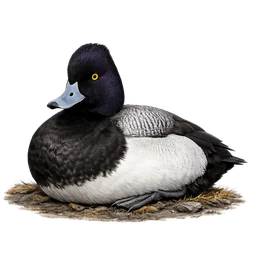
Lesser Scaup
Aythya affinis
- uncommon
- 40 km/h
- Least Concern
North America's most abundant diving duck. Your message rides with the raft.
- Population
- ~3.7 million mature individuals (2018 estimate, IUCN/BirdLife 2021 assessment); Cornell cites ~3.8 million; down from ~6.9 million in the 1970s per Wikipedia/USGS survey data
- Habitat
- Freshwater lakes, arctic/boreal marshes and ponds (plus reservoirs and agricultural ponds in the southern US) for breeding; during winter uses freshwater or brackish lakes, rivers, coastal lagoons, bays, and sheltered estuarine/marine waters
- Fun fact
- The Lesser Scaup is North America's most abundant diving duck, yet its purple (vs. green) head sheen is an unreliable field mark that varies with light — head shape (a peaked crown toward the back, less bulging forehead) is the more diagnostic way to separate it from the closely related Greater Scaup.
- Range
- Breeds from Alaska through western/central Canada to the northern Great Plains and western Montana; winters from the Great Lakes/southern US and Pacific/Atlantic coasts south through Mexico, Central America, the West Indies, and Bermuda to northern South America (Colombia); rare vagrant to Europe, Hawaii, and Japan
- Diet
- Omnivorous diving duck; mainly mollusks (mussels, clams) plus aquatic plant seeds and vegetation (sedges, bulrushes, pondweeds, wild celery, wild rice), supplemented with crustaceans, aquatic insects, and small fish especially in winter
- Size
- 0.43 m
- Wingspan
- 0.73 m
- Lifespan
- 18 years