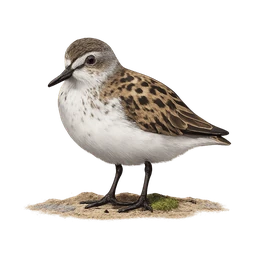
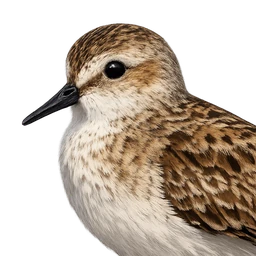
Profile
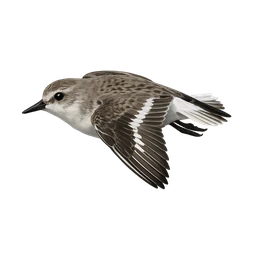
In flight
Cranes & Waders
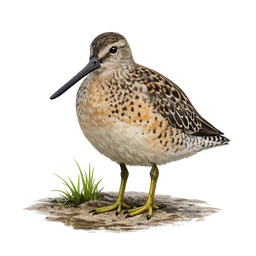
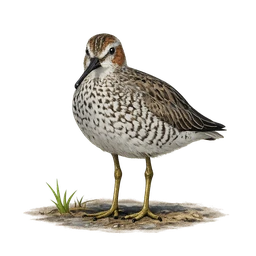
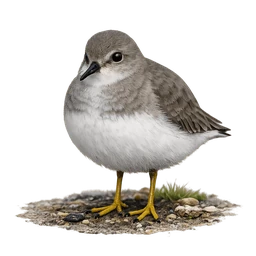
Semipalmated Sandpiper
Calidris pusilla
- common
- 28 km/h
- Starter
- Near Threatened
Partial webbing between the toes, hence the name. Stages by the hundreds of thousands in the Bay of Fundy.
- Population
- 9-11 million mature individuals; declining sharply on the Atlantic coast/eastern population (~40% over three generations) but increasing on the Pacific coast
- Habitat
- Breeds on high and low Arctic/subarctic wet sedge or heath tundra near pools, rivers, and lakes; on migration and in winter uses coastal sandy beaches, intertidal mudflats, lagoons, and saltmarsh
- Fun fact
- During spring migration, huge flocks of Semipalmated Sandpipers stage at Delaware Bay to gorge on horseshoe crab eggs, fueling the nonstop flight to Arctic breeding grounds.
- Range
- Breeds from eastern Siberia across Alaska and northern Canada to Labrador; winters along the Pacific coast from Mexico to Chile and the Atlantic coast from the Caribbean south to central Argentina, with mass migratory stopovers (e.g., Delaware Bay, Bay of Fundy) in between
- Diet
- Aquatic and terrestrial invertebrates — insect larvae, spiders, small snails, worms, and crustaceans; relies heavily on horseshoe crab eggs at key stopover sites during spring migration, and females eat small mammal bones for calcium before egg-laying
- Size
- 0.165 m
- Wingspan
- 0.36 m
- Lifespan
- 14 years