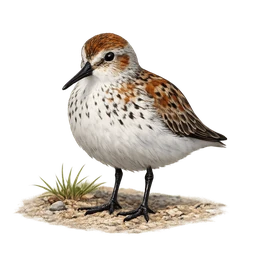
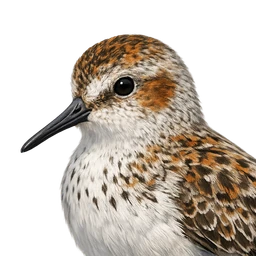
Profile
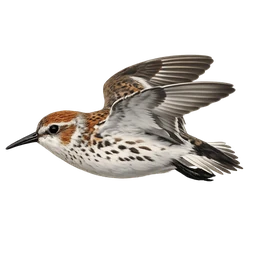
In flight
Seabirds
Western Sandpiper
Calidris mauri
- common
- 56 km/h
- Starter
- Least Concern
Pacific flyway specialist with a slightly drooped bill. Picks biofilm off mudflats like it's grazing.
- Population
- ~3,500,000 mature individuals (BirdLife/IUCN assessment); suspected decreasing trend
- Habitat
- Breeds on coastal tundra and dry tundra/dwarf-birch-sedge habitat in the Arctic; during migration and winter uses mudflats, beaches, estuaries, river deltas, saltmarshes, sandflats, lagoons, salt evaporation ponds/abandoned shrimp farms, sewage ponds, lake and river margins, and flooded or plowed agricultural fields
- Fun fact
- Beyond typical invertebrate prey, Western Sandpipers are known to graze directly on the nutrient-rich biofilm coating intertidal mudflats, skimming or slurping up the diatom-and-microbe film with specialized bill and tongue structures.
- Range
- Breeds primarily in western Alaska (Seward Peninsula to the Alaska Peninsula), with small numbers also breeding in eastern Siberia (Chukotka); winters along the Pacific coast from Oregon south to Peru, the Atlantic coast from New Jersey south through South America, the Gulf Coast, and the Caribbean, with large numbers passing through the continental interior on migration; a very rare vagrant to western Europe
- Diet
- Small invertebrates including insects, spiders, small crustaceans, mollusks (e.g. clams), and marine (polychaete) worms, plus brine shrimp and midges; on coastal mudflats also grazes on surface biofilm (a mix of diatoms, microbes, and organic detritus); bill-length differences between sexes (longer-billed females probe, shorter-billed males peck/glean by sight) reduce competition for food
- Size
- 0.155 m
- Wingspan
- 0.36 m
- Lifespan
- 9 years