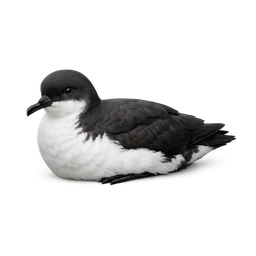

Profile

In flight
Celestial Couriers
Arctic Tern
Sterna paradisaea
- celestial
- 90 km/h
- Least Concern
Migrates pole to pole, more miles of daylight than any creature on Earth. The real long-distance icon.
- Population
- More than 2 million mature individuals globally, over half in Europe (European population ~564,000-906,000 breeding pairs); overall trend decreasing
- Habitat
- Coastal shorelines, islands, and occasionally inland tundra near water during breeding; open ocean while migrating and wintering off Antarctic pack ice
- Fun fact
- The Arctic Tern makes the longest migration of any animal on Earth, flying pole to pole each year — one tracked individual covered about 96,000 km in 10 months — accumulating roughly 2.4 million km over a lifetime and experiencing more daylight annually than any other creature.
- Range
- Circumpolar Arctic and subarctic breeding range across North America, Europe, and Asia; migrates the full length of the Atlantic (or Pacific/Indian Ocean routes) to winter in the Southern Ocean near Antarctica
- Diet
- Small fish (herring, sandlance, capelin, cod) and marine invertebrates (krill, amphipods, small crabs); occasionally insects, worms, mollusks, and berries
- Size
- 0.35 m
- Wingspan
- 0.76 m
- Lifespan
- 30 years