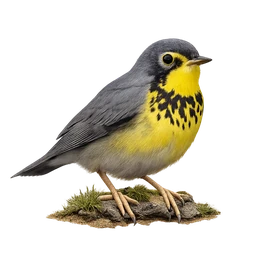
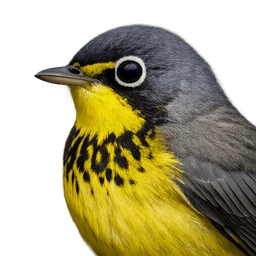
Profile
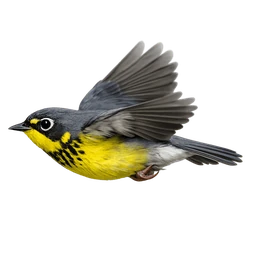
In flight
Songbirds
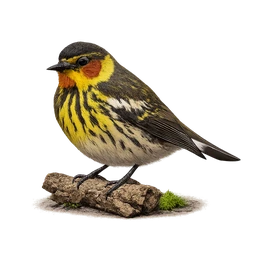
Canada Warbler
Cardellina canadensis
- epic
- 72 km/h
- Least Concern
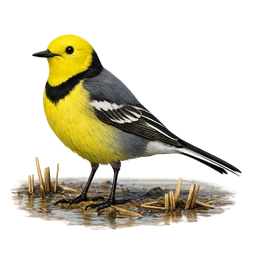
Yellow chest, black necklace, and a hurry to be elsewhere. Spends barely two months on its breeding grounds.
- Population
- IUCN/BirdLife (2019 assessment): ~2.6 million mature individuals, population trend decreasing (large, significant decline averaging ~2.2%/year from 1970–2017, with the rate slowing to ~3% decline over the most recent decade — insufficient to meet a higher threat-category threshold). Other sources give somewhat different figures from different methodologies: Partners in Flight ~4 million individuals; American Bird Conservancy ~1.5 million.
- Habitat
- Breeds in moist, shrubby-understory habitats — mixed conifer-deciduous forest with mossy/fern understory, riparian thickets, brushy ravines, forested wetlands/bogs, and (regionally) montane rhododendron thickets or aspen stands; winters in mid- to upper-elevation tropical/subtropical forest edge and thickets along the Andes.
- Fun fact
- Nicknamed the "necklaced warbler" for the bold black streaking across its yellow breast; despite Partners in Flight designating it a "Common Bird in Steep Decline," its still-large range and population keep it at IUCN Least Concern.
- Range
- Breeds across Canada (southeastern Yukon to Nova Scotia; roughly 82% of the breeding population) and the northeastern United States south through the Appalachians; winters in northern South America along the Andes from Venezuela/Guyana south to Ecuador, Peru, and northwestern Bolivia. One of the longest-distance migrant wood-warblers (>3,000 miles each way), among the last to arrive on breeding grounds each spring and first to depart in fall.
- Diet
- Primarily insects and other arthropods — beetles, flies, mosquitoes, moths, and smooth caterpillars (e.g., cankerworms) — plus spiders, snails, and worms, with some fruit taken seasonally. Forages actively low in dense understory by gleaning foliage, and often flycatches for flying insects.
- Size
- 0.135 m
- Wingspan
- 0.195 m
- Lifespan
- 8 years