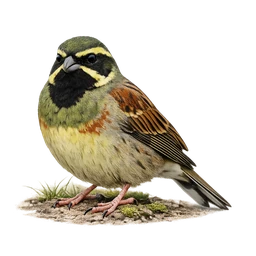
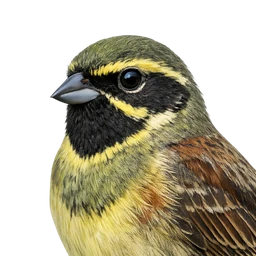
Profile
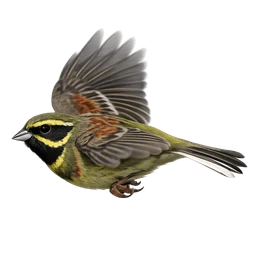
In flight
Songbirds
Cirl Bunting
Emberiza cirlus
- uncommon
- 40 km/h
- Least Concern
Nearly vanished from England, then clawed its way back through one Devon farm at a time.
- Population
- Global (BirdLife/IUCN 2021 assessment): breeding population estimated at 2,490,000-4,650,000 pairs, equating to ~4,970,000-9,300,000 mature individuals across Europe; overall trend increasing (moderate rise 1989-2013) despite historic northern-range declines from agricultural intensification. UK's edge-of-range population (south Devon, with reintroduced Cornwall population) recovered from 118 pairs (1989) to ~700 pairs (2003) to 1,100 territories (2016 national survey, the most recent full count) — nationally still UK Red-listed despite this local recovery.
- Habitat
- Mixed farmland mosaics of grass and arable fields divided by thick hedgerows with pockets of dense scrub, favoring sunny south-facing slopes; tolerates light urbanization (found in parks in some Mediterranean cities)
- Fun fact
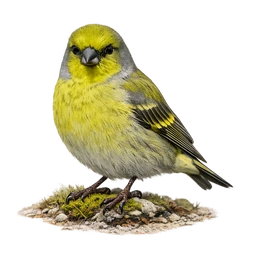
- The male Cirl Bunting's bright yellow-and-black striped head pattern makes it one of Europe's most distinctive buntings, and its UK population — reduced to just 118 pairs confined to south Devon by 1989 — has been rebuilt to roughly 1,100 territories through decades of targeted farmland conservation, even as it remains almost entirely confined to that one corner of England.
- Range
- Southern and western Europe (Iberia, France, Italy, Balkans) and Mediterranean islands, extending to NW Africa (Morocco, Algeria, Tunisia); introduced and established in South Island, New Zealand (19th century); in Britain confined almost exclusively to south Devon with a reintroduced population in Cornwall
- Diet
- Insectivorous in breeding season, taking grasshoppers, crickets, and other invertebrates especially to feed chicks; shifts to small seeds (grasses, cereals) gleaned from stubble, fallow land, and set-aside in winter
- Size
- 0.155 m
- Wingspan
- 0.24 m
- Lifespan
- 8 years