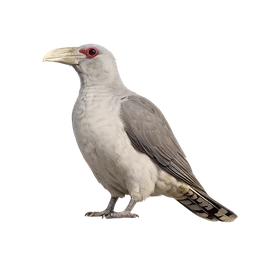
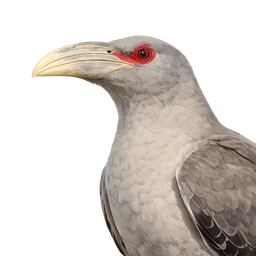
Profile
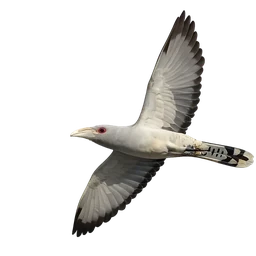
In flight
Tropical Birds
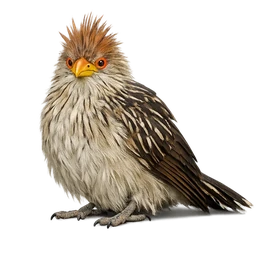
Channel-billed Cuckoo
Scythrops novaehollandiae
- rare
- 43 km/h
- Least Concern
The world's largest cuckoo, big enough to parasitize crows. Its victims raise a chick bigger than themselves.
- Population
- Global population size not quantified; described by BirdLife as uncommon in Australia and scarce elsewhere in its range, with population trend assessed as decreasing (suspected slow decline of 1-19% over three generations, per IUCN criteria) linked to forest/tree-cover loss
- Habitat
- Subtropical/tropical moist lowland forest and mangrove vegetation per BirdLife's habitat classification; more specifically rainforest, eucalypt woodland, forest edges, riverine gallery forest, and increasingly urban/suburban gardens and parks with fruiting fig trees
- Fun fact
- The Channel-billed Cuckoo is the world's largest brood-parasitic bird and largest cuckoo species, laying its eggs in the nests of large host species such as ravens, Pied Currawongs, butcherbirds, and Australian Magpies rather than raising its own young.
- Range
- Breeds in northern and eastern Australia (northeastern Western Australia through the Northern Territory and Queensland to eastern New South Wales); migrates non-breeding through New Guinea, the Bismarck Archipelago, and eastern Indonesia (including Timor-Leste) as far west as Sulawesi; vagrant records in New Caledonia and New Zealand. BirdLife gives extent of occurrence as ~11.6M km² (breeding) / ~11.2M km² (non-breeding)
- Diet
- Primarily frugivorous, especially figs (Ficus spp.), mistletoe fruit, and mulberries; also takes insects (beetles, butterflies, grasshoppers) and occasionally the eggs/nestlings of other birds
- Size
- 0.63 m
- Wingspan
- 0.97 m
- Lifespan
- 20 years