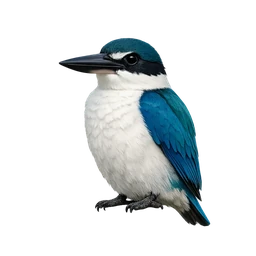
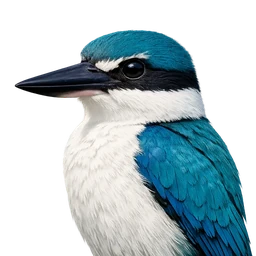
Profile
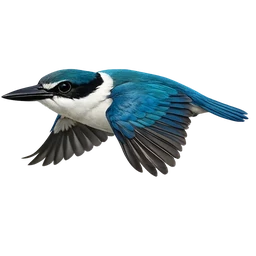
In flight
Kingfishers
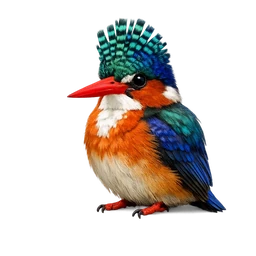
Collared Kingfisher
Todiramphus chloris
- rare
- 38 km/h
- Least Concern
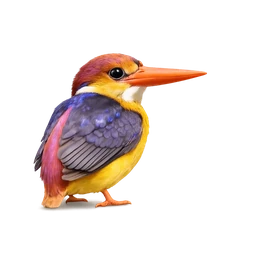
Found on 50+ island forms across coastal Asia. Hunts crabs and lizards, not just fish. Adaptable and loud.
- Population
- Global population size not numerically quantified (IUCN/BirdLife: "no overall population estimate is available"); described as widespread and common to abundant throughout its extremely large range (~47.8 million km² extent of occurrence), with a suspected slow decreasing trend driven by mangrove habitat destruction and estuarine pollution
- Habitat
- Primarily coastal mangrove vegetation, tidal mudflats, sandy beaches and harbors; also farmland, open woodland, grassland, coconut plantations, gardens, and along rivers inland; occurs from sea level up to about 1,500 m elevation
- Fun fact
- The Collared Kingfisher has one of the broadest ranges of any kingfisher on Earth, spanning from the Red Sea to the islands of Polynesia, with taxonomists recognizing roughly 14 to 50 subspecies (depending on classification) that vary in plumage across this range.
- Range
- Extremely wide range from the Red Sea coasts of NE Sudan/Somalia and the Arabian Peninsula, across the Indian subcontinent and Southeast Asia, through Indonesia and the Philippines, to Australia and Melanesia/Polynesia (~14 eBird/BOW subspecies groups, up to ~50 recognized subspecies under broader taxonomies); non-migratory
- Diet
- Opportunistic carnivore: crabs, shrimp and small fish in coastal populations; insects (beetles, cicadas, grasshoppers, moths), spiders, earthworms, snails, frogs, lizards, small snakes, and occasionally small birds, mice, or bird eggs/chicks in inland populations
- Size
- 0.24 m
- Lifespan
- 11 years