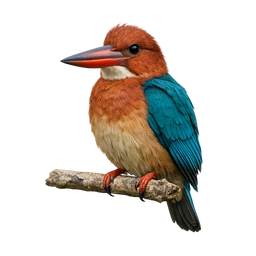
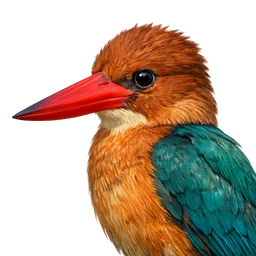
Profile
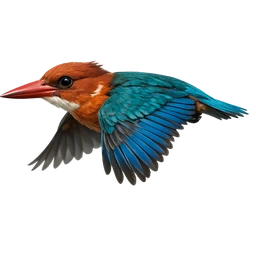
In flight
Kingfishers
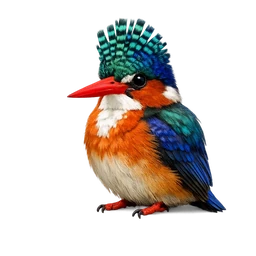
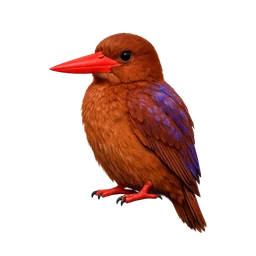
Guam Kingfisher
Todiramphus cinnamominus
- legendary
- 40 km/h
- Extinct in the Wild
Extinct in the wild since the brown tree snake arrived. Fewer than 200 alive in captive breeding programs.
- Population
- ~139–145 individuals in managed captive populations (AZA institutions + Guam Dept. of Agriculture, ~139 reported as of 2020); zero self-sustaining in the wild, with a small experimental reintroduction underway at Palmyra Atoll (9 birds released beginning 2024, first wild eggs laid April 2025)
- Habitat
- Historically mature and second-growth limestone and volcanic forest, riparian forest, coconut plantations, and large wooded gardens on Guam, 0–300 m elevation (avoiding savannah and wetlands); nested in cavities excavated in trees or in termite mounds.
- Fun fact
- Despite being a kingfisher, the Guam Kingfisher (locally called "sihek") almost never eats fish, instead hunting insects and skinks — and in April 2025 a reintroduced pair on Palmyra Atoll laid the species' first wild eggs in nearly 40 years.
- Range
- Endemic to Guam, Mariana Islands; population crashed from an estimated 3,000 birds in the early 1980s to extirpation in the wild by 1986 (not 1988 as in the first-pass draft) due to predation by the introduced brown tree snake. Survives only in captive-breeding facilities in the continental US and Guam, with birds recently released experimentally on Cooper Island, Palmyra Atoll, as a snake-free surrogate range.
- Diet
- Unusual for a kingfisher, it eats almost no fish; preys on insects (including grasshoppers), spiders, skinks and other small lizards, and small crustaceans, typically hunted from a perch and taken on the ground.
- Size
- 0.22 m
- Lifespan
- 20 years