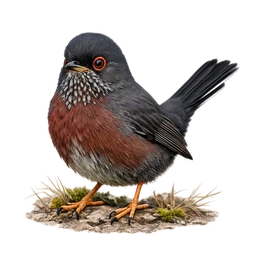
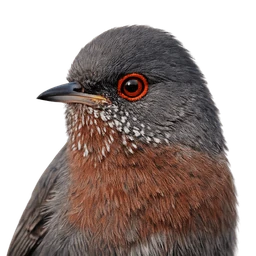
Profile
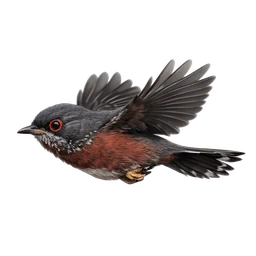
In flight
Songbirds
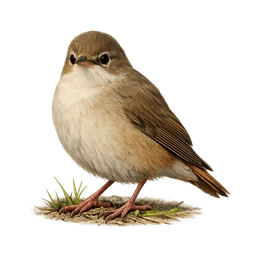
Dartford Warbler
Curruca undata
- rare
- 55 km/h
- Near Threatened
Skulks in gorse and heather year-round, refusing to migrate. Stays for the British winter on principle.
- Population
- 1.4–3.4 million mature individuals globally (2022 assessment), declining overall (~20–29% over three generations); Europe holds roughly 85% of the global population and has seen an estimated ~38% decline 1980–2018
- Habitat
- Dense, low, homogeneous scrub — heathland, gorse and heather stands, garrigue and low maquis (Ulex, Erica, Rosmarinus) — typically early-succession vegetation after fire, from sea level up to about 1,800–2,000 m
- Fun fact
- The UK's Dartford warbler population crashed to as few as 10 pairs after the brutal winter of 1962–63 but has since rebounded to thousands of pairs, aided by climate warming and heathland conservation.
- Range
- Patchily distributed across southern and western Europe (southern England, France, Iberia, Italy) and northwest Africa (Morocco, Algeria, Tunisia); largely sedentary with some short dispersive movement
- Diet
- Mostly arthropods — caterpillars, beetles, flies and spiders, plus their larvae — with seeds and berries taken in colder months
- Size
- 0.13 m
- Wingspan
- 0.16 m
- Lifespan
- 4 years