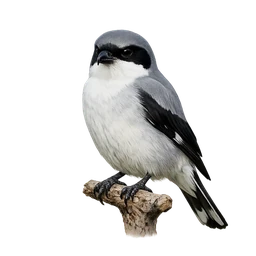
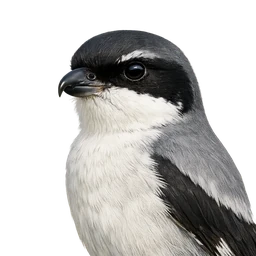
Profile
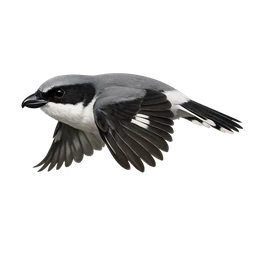
In flight
Songbirds
Grey Butcherbird
Cracticus torquatus
- uncommon
- 42 km/h
- Least Concern
Hooks prey on thorns to eat later. Has one of the most melodious songs of any Australian bird.
- Population
- Not numerically quantified by IUCN/BirdLife (listed as unknown population size); qualitatively described as common to fairly common and widespread across its Australian range
- Habitat
- Eucalypt forests and woodlands, mallee and acacia shrublands, rainforest edges and riparian vegetation, and well-adapted to urban parks, gardens, and residential/suburban areas
- Fun fact
- Grey Butcherbirds wedge or impale leftover prey into forked branches like a butcher's hook to store it for later — the very behavior that gives butcherbirds their common name.
- Range
- Endemic to Australia; widespread across southern, eastern and south-western coastal/temperate regions (including Brisbane, Sydney, Melbourne, Perth, Hobart), generally absent from the arid interior/central deserts and the far-northern monsoon tropics, though isolated populations occur in the Kimberley and northernmost Northern Territory
- Diet
- Carnivorous: mainly insects and other invertebrates, plus small vertebrates including small birds, nestlings, and lizards, with occasional fruit and seeds; hunts by pouncing on prey from an open perch (mostly ground-caught prey, some aerial), and caches or impales surplus prey in the fork of a branch or on thorns for later consumption
- Size
- 0.29 m
- Wingspan
- 0.4 m
- Lifespan
- 10 years