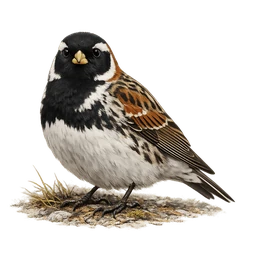
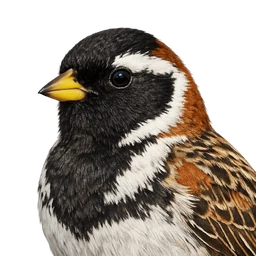
Profile
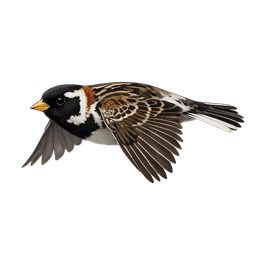
In flight
Songbirds
Lapland Longspur
Calcarius lapponicus
- uncommon
- 40 km/h
- Least Concern
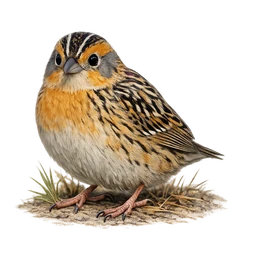
Breeds on the tundra, winters in stubble fields with sparrows. One of the most abundant birds you've never noticed.
- Population
- ~119–140 million mature individuals globally, decreasing slowly (BirdLife/IUCN, 2010 baseline estimate)
- Habitat
- Breeds on wet Arctic tundra, riparian areas, and marshes (nests on vegetated slopes or among tussocks in low-lying wet ground); winters in open agricultural fields, grasslands, steppe, and coastal areas
- Fun fact
- Male Lapland Longspurs acquire their striking black-faced, chestnut-naped breeding plumage not by growing new feathers but by the buff-and-white feather tips wearing away over the winter to reveal the bold colors beneath.
- Range
- Circumpolar Arctic breeder across northernmost Canada and the US, Arctic Europe, and the Palearctic; winters south to the Russian steppes, the southern United States, and coastal areas of Scandinavia, southern Sweden, Denmark, and Great Britain
- Diet
- Mostly seeds (grass, foxtail, millet, crabgrass, wheat) in winter, switching to insects/arthropods (especially dipteran larvae and adults) during the breeding season; can consume 3,000–10,000 prey items per day
- Size
- 0.155 m
- Wingspan
- 0.26 m
- Lifespan
- 5 years