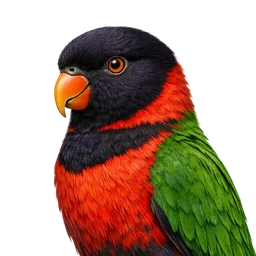
Profile
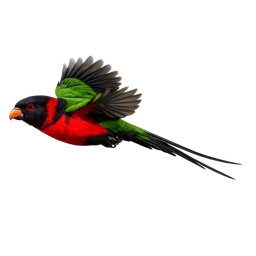
In flight
Parrots
Papuan Lorikeet
Charmosyna papou
- epic
- 48 km/h
- Least Concern
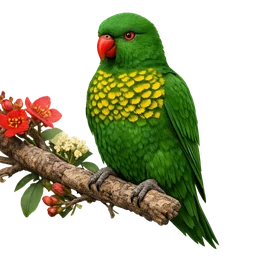
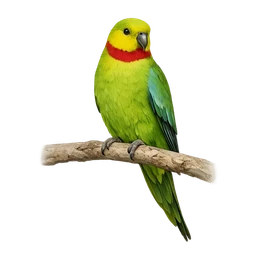
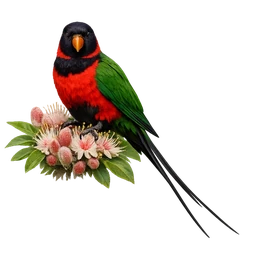
Nests at over 3,000m in the New Guinea highlands, the highest-altitude lorikeet on Earth. Brightly colored.
- Population
- Not numerically quantified by BirdLife/IUCN; described by BirdLife DataZone (2024 assessment) as "fairly common throughout its range" with a stable population trend, Extent of Occurrence ~10,900 km²
- Habitat
- Subtropical/tropical moist montane forest at higher elevations in New Guinea's central mountain ranges -- Wikipedia gives roughly 1,300-3,600 m; BirdLife DataZone gives 1,500-3,500 m. Shows medium forest dependency (BirdLife notes only ~1.4% tree-cover loss across its mapped range over three generations).
- Fun fact
- The Papuan Lorikeet (West Papuan lorikeet) occurs in two distinct color morphs -- a typical red-and-green plumage and a rarer all-black melanistic morph -- and adults of both morphs grow two strikingly elongated, yellow-tipped central tail streamers.
- Range
- Endemic to New Guinea; under current (post-2014) taxonomy, Charmosyna papou is restricted to Indonesian (western) New Guinea -- the Vogelkop Peninsula and central highlands -- per BirdLife DataZone's description of the species as endemic to Indonesia. Eastern-highland populations formerly treated as subspecies of this bird (stellae, wahnesi, goliathina) were split off as the separate species Stella's Lorikeet (Charmosyna stellae).
- Diet
- Primarily nectar and pollen from flowering canopy trees, gathered with a specialized brush-tipped tongue typical of lorikeets; supplemented with soft fruit, blossoms, and occasional insects
- Size
- 0.42 m
- Lifespan
- 11.3 years