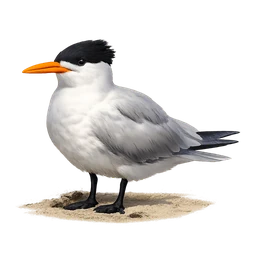

Profile
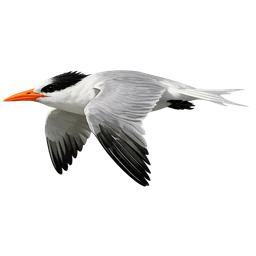
In flight
Seabirds
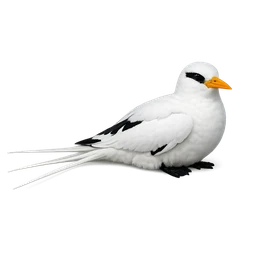
Royal Tern
Thalasseus maximus
- common
- 56 km/h
- Starter
- Least Concern
Orange-billed and crested, patrolling warm coastlines with regal patience. Plunges from height for the catch.
- Population
- No precise global figure published; IUCN/BirdLife rate the species as very large with a stable overall trend but data quality "poor" (derivation "estimated," last updated 2009). One regional estimate puts the North American breeding population at roughly 100,000-150,000 birds.
- Habitat
- Coastal and estuarine: sandy islands and isolated beaches (nests in dense colonies away from mammalian predators), foraging over estuaries, mangroves, lagoons, and open salt water typically within about 100 m of shore.
- Fun fact
- Royal Tern chicks gather into large "creches" (nursery groups) of hundreds of chicks on the breeding colony about two weeks after hatching; parents can still pick out and feed only their own offspring, recognizing them by voice.
- Range
- The Americas and West Africa. Americas: breeds from southern California/Sinaloa (Mexico) and from Maryland/Virginia through Texas south along the Gulf, through the West Indies and the Guianas, to southeastern Brazil and Chubut, Argentina; winters from North Carolina and California south through Central America, the Caribbean, and along the Pacific coast to Peru. Africa: breeds from Mauritania to Guinea, wintering from Morocco to Namibia.
- Diet
- Mostly small fish (anchovies, weakfish, croakers, and similar 2-4 inch fish), plus shrimp and crabs; occasionally insects and hatchling sea turtles. Forages by flying roughly 6-9 m (20-30 ft) above water and plunge-diving to seize prey.
- Size
- 0.48 m
- Wingspan
- 1.3 m
- Lifespan
- 31 years