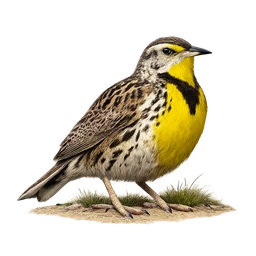
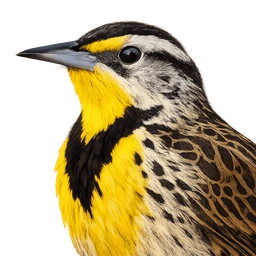
Profile
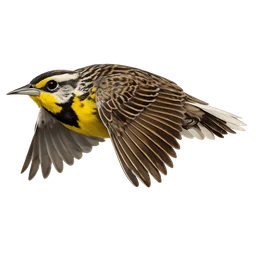
In flight
Songbirds
Western Meadowlark
Sturnella neglecta
- rare
- 84 km/h
- Least Concern
Flute-like song that defined the western frontier soundtrack. State bird of six states for a reason.
- Population
- Not precisely quantified globally; widespread and common across its range despite a slow, statistically insignificant long-term decline over the last 40 years per North American BBS/CBC data
- Habitat
- Open grasslands, prairies, meadows, pastureland, and arable/cultivated fields with low-growing vegetation; also marsh edges and roadsides; elevation 0-2,800 m; forms mixed foraging flocks with other blackbirds/starlings in winter
- Fun fact
- Western Meadowlarks pry open cracks in soil with their bills using a technique called "gaping" to reach insects other ground-foraging birds can't access, and will even scavenge roadkill carrion in harsh winters when other food is scarce.
- Range
- Western and midwestern North America — breeds from southern Canada through the western/central United States into Mexico (state bird of Kansas, Montana, Nebraska, North Dakota, Oregon, and Wyoming); extent of occurrence ~10,100,000 km² breeding / ~7,760,000 km² non-breeding; northern populations migratory, southern/western populations largely resident
- Diet
- Omnivorous: seeds (grain in winter/early spring, weed seeds in fall) plus ground insects (beetles, grasshoppers, crickets, caterpillars) especially in warmer months; forages on the ground and uses "gaping" — inserting its bill into soil or substrate and prying it open to expose hidden prey; will scavenge carrion (e.g., roadkill) during harsh winters
- Size
- 0.21 m
- Wingspan
- 0.41 m
- Lifespan
- 6.5 years