Profile
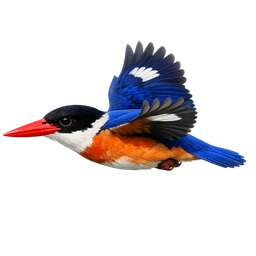
In flight
Kingfishers
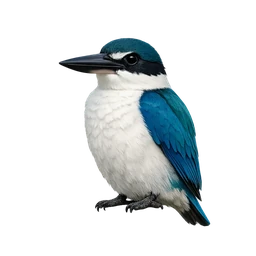
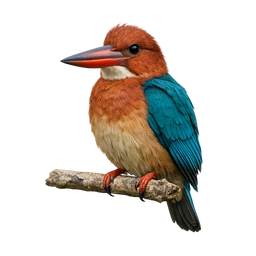
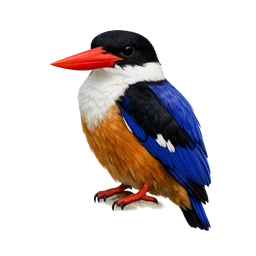
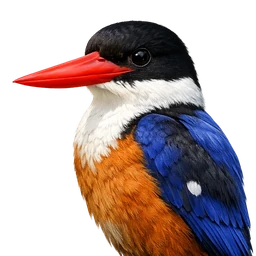
Black-capped Kingfisher
Halcyon pileata
- rare
- 38 km/h
- Vulnerable
Migrates across sea and forest to hunt crabs in mangroves. That cobalt flash in the dark means mail.
- Population
- Not precisely quantified; the IUCN/BirdLife assessment states the global population "is not thought to approach 10,000 mature individuals" and is decreasing, though the species is locally frequent and common to uncommon
- Habitat
- Mangroves, coastal waters, estuaries, and rivers; also occurs inland along wetlands, creeks, rice fields, bamboo forests, gardens, and temperate deciduous forest edges, from lowlands up to ~1,500-1,525 m elevation
- Fun fact
- The Black-capped Kingfisher's brilliant blue-purple feathers were once so prized that the birds were hunted extensively to supply the millinery and fan-making trades in China; in Hong Kong the feathers were cut and glued onto ornaments worn by women.
- Range
- Widely distributed and largely resident across tropical Asia — India (incl. Andaman & Nicobar Is., even remote islands like Narcondam), Sri Lanka, Bangladesh, Myanmar, the Malay Peninsula, Thailand, Hainan, and the Ryukyu Islands — with an additional breeding range across Korea, China (Liaoning south to Hainan/east Gansu), and northern Indochina; these northern/continental populations are migratory, wintering south through Sri Lanka, Indochina, the Malay Peninsula, the Greater Sundas, and the southern Philippines, reaching Sulawesi only in winter. Vagrant to Pakistan.
- Diet
- Coastal/wintering populations take fish and crabs by diving from perches; inland/breeding populations feed heavily on large insects (dragonflies, orthopterans, beetles) plus frogs and small reptiles.
- Size
- 0.28 m