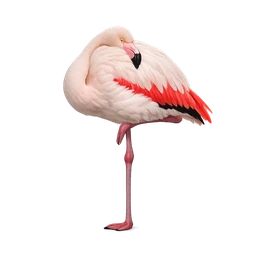
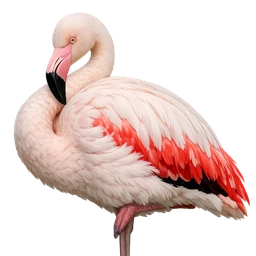
Profile
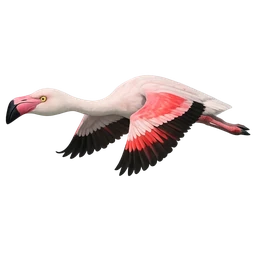
In flight
Cranes & Waders
Chilean Flamingo
Phoenicopterus chilensis
- rare
- 50 km/h
- Near Threatened
Pink from carotenoids in the brine shrimp it filters. Stop feeding it and it turns white in weeks.
- Population
- Roughly 300,000 individuals (based on a 2010 rangewide coordinated census that counted ~283,000), per the 2018 IUCN/BirdLife assessment; suspected to undergo a moderately rapid decline over three generations due to egg harvesting, hunting, and habitat disturbance/degradation (down from an estimated ~500,000 in the mid-1970s)
- Habitat
- Shallow, alkaline/brackish salt lakes, soda lakes, and coastal mudflats, estuaries and lagoons, from sea level up to about 4,500 m in the Andean altiplano; breeding requires suitable salinity plus islands or extensive surrounding mudflats, conditions not met annually at many sites
- Fun fact
- Chilean Flamingo chicks hatch with gray (or peach-tinged) plumage and only turn pink gradually over two to three years, as carotenoid pigments from their crustacean- and algae-rich diet build up in their feathers.
- Range
- Temperate South America: resident/breeding range across Argentina, Bolivia, Chile and Peru (through the Andes to Tierra del Fuego); winters into Paraguay, Uruguay and southeastern Brazil, with vagrants recorded in Ecuador and the Falkland Islands; extent of occurrence estimated at ~7,680,000 km²
- Diet
- Filter feeder; wades or swims while sweeping its downturned bill through mud and shallow alkaline water to strain blue-green algae, diatoms, protozoans, brine shrimp and brine flies, small mollusks, insect larvae/worms and other invertebrates — consuming roughly 10% of its body weight daily; carotenoids in this diet produce its pink plumage
- Size
- 1.2 m
- Wingspan
- 1.4 m
- Lifespan
- 50 years