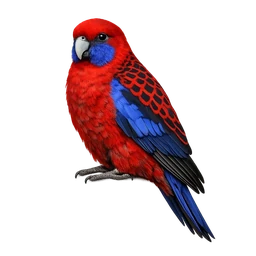
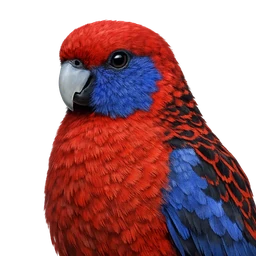
Profile
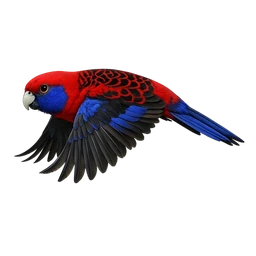
In flight
Parrots
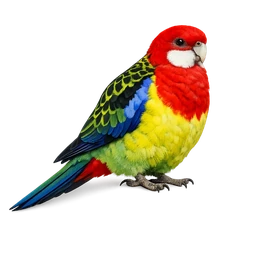
Crimson Rosella
Platycercus elegans
- rare
- 48 km/h
- Least Concern
Scarlet body, cobalt-blue cheeks, and a long tail. Pairs stay together year-round, preening each other constantly.
- Population
- Not numerically quantified; global population size has not been counted, described as common to abundant, with a population trend suspected to be decreasing due to ongoing habitat destruction
- Habitat
- Tall eucalypt and wetter forests; subtropical/tropical moist montane and lowland forest, dry forest, and moist shrubland; also woodland, riparian areas, urban areas, rural gardens, and plantations; medium forest dependency; occurs from sea level to about 1,900 m
- Fun fact
- Crimson Rosellas can recognize members of their own subspecies/color-morph population by scent, an unusual ability among birds; juveniles are also strikingly different in color (greenish-olive), gradually "ripening" to full adult crimson plumage over about 15 months.
- Range
- Eastern and southeastern Australia: red (crimson) form in northern Queensland (a smaller, darker disjunct population) and again from southern Queensland through coastal New South Wales, Victoria and Tasmania to southeastern South Australia and Kangaroo Island; yellow form along the Murray/Murrumbidgee river system; orange form restricted to South Australia's Flinders Ranges (intergrades where forms meet); introduced and established as a breeding resident in New Zealand and on Norfolk Island. Extent of occurrence approx. 2,600,000 km².
- Diet
- Seeds of eucalypts, grasses and shrubs, plus fruits, nuts, berries, nectar and tree blossoms; also insects such as termites, aphids, beetles and caterpillars; readily visits garden seed trays and orchards
- Size
- 0.36 m
- Lifespan
- 30 years