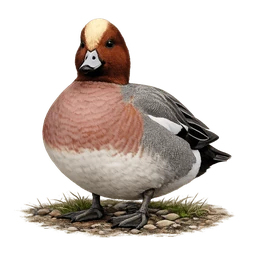
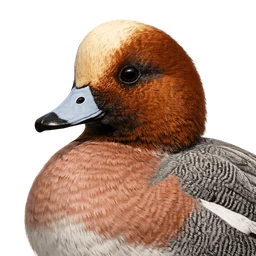
Profile
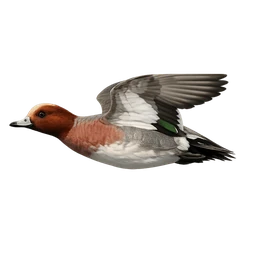
In flight
Waterfowl
Eurasian Wigeon
Mareca penelope
- uncommon
- 40 km/h
- Least Concern
The wigeon that crossed the wrong ocean. Shows up in North America just often enough to thrill birders.
- Population
- ~2 million (Partners in Flight global breeding-population estimate, single-sourced — could not independently corroborate a distinct IUCN/BirdLife/Wetlands International figure, as DataZone would not render); most regional populations stable, though the claim that Russian and Middle Eastern segments have declined sharply since the 1980s could not be independently verified in this pass and should be treated as unconfirmed detail rather than a settled fact
- Habitat
- Breeds on shallow freshwater wetlands - marshes, ponds, and lakes - in boreal forest and forest-tundra transition zones; winters on freshwater lakes and marshes plus coastal habitats such as saltmarshes, brackish lagoons, estuaries, and bays (independently confirmed via Cornell All About Birds life-history page)
- Fun fact
- The Eurasian Wigeon's species name, penelope, references the Greek mythological queen Penelope (wife of Odysseus/Ulysses); classical etymology ties her name to a duck (penelops) said to have rescued her after she was thrown into the sea as a child.
- Range
- Breeds across the northern Palearctic from Iceland through Scandinavia and Russia to eastern Siberia; winters south to western and southern Europe, the Mediterranean, Africa, the Middle East, and South/Southeast Asia; a rare but regular winter visitor to North America (both coasts), with eastern-NA birds likely from Iceland and western-NA birds likely from eastern Asia/Russia (per Cornell)
- Diet
- Primarily herbivorous dabbling duck - eats aquatic and terrestrial plant leaves, stems, roots, rhizomes, and seeds (e.g. wigeongrass, cattail, sedge) and grazes on grasses/grains on land; during breeding season, especially females and ducklings, supplements heavily with aquatic invertebrates such as mayflies, midges, caddisflies, beetles, and small mollusks/crustaceans (independently confirmed via Cornell)
- Size
- 0.47 m
- Wingspan
- 0.755 m
- Lifespan
- 20 years