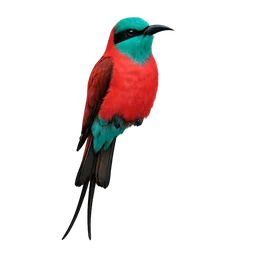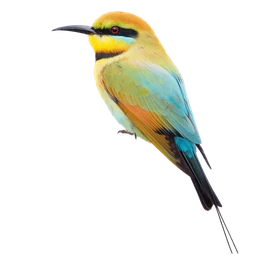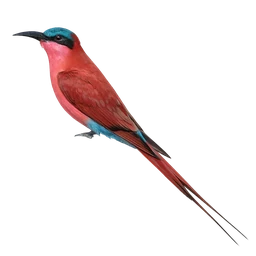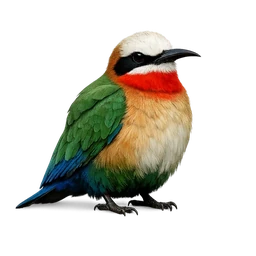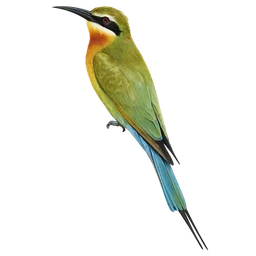
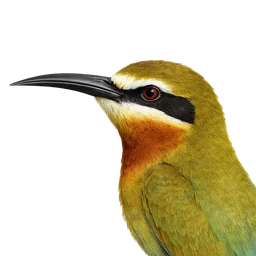
Profile
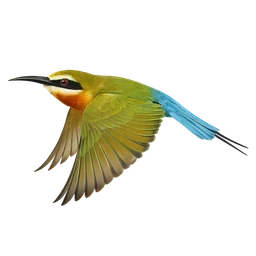
In flight
Bee-eaters & Rollers
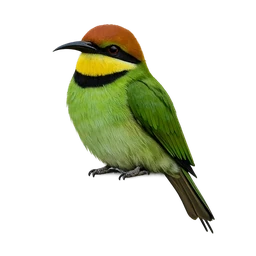
Madagascar Bee-eater
Merops superciliosus
- uncommon
- 46 km/h
- Least Concern
Catches bees mid-air, then beats them against a branch to remove the stinger before swallowing.
- Population
- Not numerically quantified; BirdLife/IUCN (2025 assessment) describe it as widespread and generally common across a ~12.5 million km² range spanning 25 countries/territories
- Habitat
- Dry grasslands and savanna, subtropical/tropical dry and moist forest, mangroves, arable land, plantations, rural gardens, urban areas, and rocky coastal/sea-cliff zones; occurs from sea level to about 2,180 m elevation
- Fun fact
- Unlike most bee-eaters, the Madagascar (Olive) Bee-eater does not breed cooperatively, and its fledglings become independent in only about 19 days — roughly half the time of related species.
- Range
- Sub-Saharan and East Africa plus Madagascar and the Comoros/Mayotte; breeds in Madagascar and southern Africa, migrating north into eastern/central Africa in the non-breeding season (extent of occurrence ~12.5 million km² across ~25 countries)
- Diet
- Aerial insects taken on the wing, especially bees, wasps, and other flying insects, typically hunted from an open perch
- Size
- 0.25 m
- Wingspan
- 0.36 m
- Lifespan
- 8 years