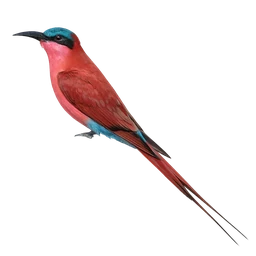
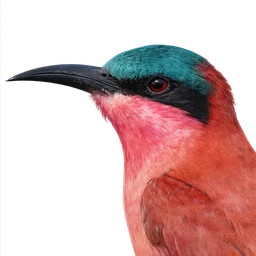
Profile
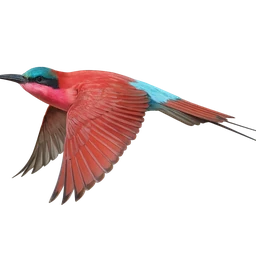
In flight
Bee-eaters & Rollers
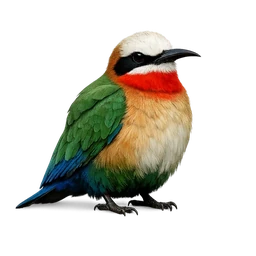
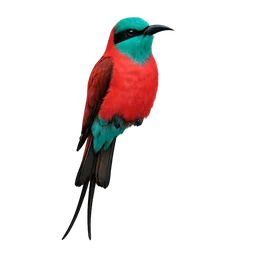
Southern Carmine Bee-eater
Merops nubicoides
- epic
- 50 km/h
- Least Concern
Catches bees mid-air and rubs the venom off before eating. Hitches rides on elephants and buffalo to snatch flushed insects.
- Population
- Global population size not quantified by IUCN/BirdLife; number of mature individuals unknown, suspected to be declining due to ongoing habitat destruction (decline not considered rapid enough to warrant a higher threat category)
- Habitat
- Dry savanna (major habitat), permanent rivers, streams, floodplains and freshwater habitats; breeds in low-altitude river valleys with vertical earth banks for burrow-nesting (tunnels 1-2 m long, 2-5 eggs); occurs 0-2,200 m elevation
- Fun fact
- Southern Carmine Bee-eaters famously perch on the backs of kori bustards, ground hornbills, antelope, and even moving vehicles, using the animal as a mobile hunting platform to snatch insects flushed up from the grass; they also roost and nest communally in dense colonies in earthen riverbanks.
- Range
- Sub-equatorial/southern Africa across ~14 countries (breeding EOO ~1,690,000 km²: South Africa/KwaZulu-Natal, Namibia, Botswana, Zimbabwe, Zambia, Mozambique, Angola); a full long-distance migrant expanding to ~4,620,000 km² non-breeding EOO into equatorial/central Africa (DRC, Gabon, Kenya) roughly March-August
- Diet
- Bees and other flying insects, hawked from exposed perches or caught by riding on the backs of large animals (kori bustards, ground hornbills, livestock) or vehicles, and gathering at wildfires to catch flushed insects
- Size
- 0.39 m
- Wingspan
- 0.47 m
- Lifespan
- 7.6 years