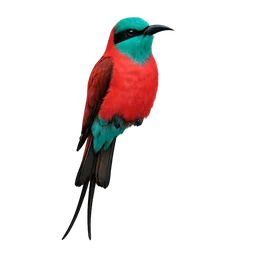
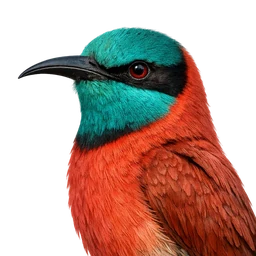
Profile
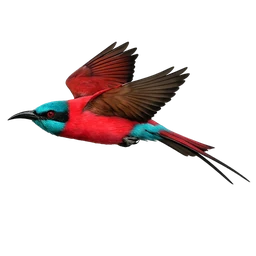
In flight
Bee-eaters & Rollers
Northern Carmine Bee-eater
Merops nubicus
- legendary
- 52 km/h
- Least Concern
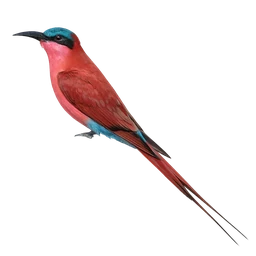
Brilliant carmine body, turquoise-green head. Perches on Kori Bustards to pluck insects flushed by the bird's footsteps.
- Habitat
- Wooded savanna and shrub-dotted grassland, arid acacia steppe, floodplains, and lake/river shores from sea level up to roughly 1,000-1,500 m; nests colonially in tunnels excavated into sandy cliffs and riverbanks.
- Fun fact
- Northern Carmine Bee-eaters nest in dense colonies dug into sandy riverbank cliffs, with individual nesting tunnels that can run more than 8 feet (2.4 m) horizontally into the cliff face.
- Range
- Sub-Saharan Africa across the northern tropics, occurring in 28+ countries from Senegal and Mauritania in the west through Chad, Cameroon, Sudan and Ethiopia to Somalia and Kenya in the east, extending south to Tanzania and Uganda; occurs as a vagrant further south (e.g. Burundi). BirdLife DataZone (2025) gives extent of occurrence as ~8.63 million km2 (breeding) and ~10.6 million km2 (non-breeding).
- Diet
- Aerial insectivore, hawking flying insects from a perch: mainly bees and other Hymenoptera (including flying ants), plus grasshoppers, locusts and other Orthoptera, cicadas, butterflies, dragonflies and termites.
- Size
- 0.27 m
- Wingspan
- 0.29 m
- Lifespan
- 7.4 years