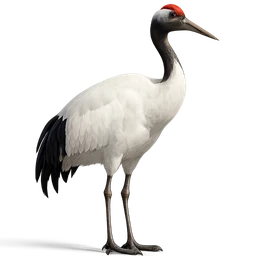
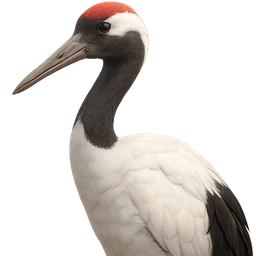
Profile
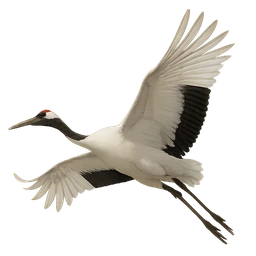
In flight
Cranes & Waders
Red-crowned Crane
Grus japonensis
- epic
- 64 km/h
- Vulnerable
Symbol of luck and longevity in East Asia. Your message arrives with a thousand years of good fortune.
- Population
- ~2,000–2,650 mature individuals (2021 IUCN/BirdLife assessment, decreasing trend); ~3,800 total birds (adults + immatures) counted across the winter range in 2020 (~1,900 Japan, ~1,600 Korea, ~350 China)
- Habitat
- Wetlands, marshes, and river floodplains — grass/reed/sedge marshes for breeding; tidal flats, saltmarshes, wet grassland, saltpans, aquaculture ponds, and rice paddies in winter
- Fun fact
- The red-crowned crane is one of the tallest crane species in the world and a longstanding symbol of luck, longevity, and fidelity in Chinese and Japanese art, since pairs mate for life.
- Range
- Breeds in southeastern Russia, northeastern China, and Mongolia, with a non-migratory resident population on Hokkaido, Japan; the continental population winters on the Korean Peninsula (incl. the DMZ) and east-central/coastal China (Yellow River Delta, Jiangsu)
- Diet
- Omnivorous — fish, aquatic insects, amphibians, small vertebrates, and aquatic plants, supplemented by grains such as rice and corn, vegetables, and berries near farmland/feeding stations
- Size
- 1.5 m
- Wingspan
- 2.35 m
- Lifespan
- 30 years