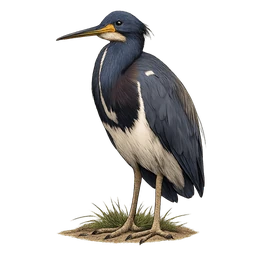
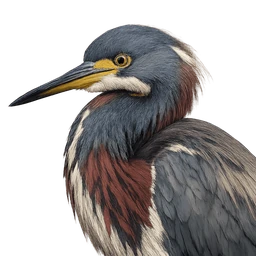
Profile
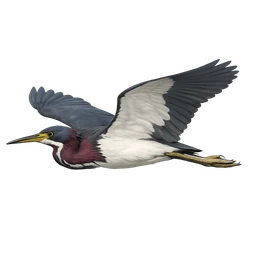
In flight
Cranes & Waders
Tricolored Heron
Egretta tricolor
- uncommon
- 40 km/h
- Least Concern
Slender, dark blue with a white belly stripe. Stalks shallows with surgical precision.
- Population
- Global population not numerically quantified by BirdLife/IUCN; described qualitatively as widespread and "quite common" with an apparent long-term decline in parts of its range (was the most numerous heron in North America before cattle egrets arrived in the 1950s; Florida's central Everglades breeding pairs fell ~75% 1996-2010, prompting FL state-threatened status). One concrete regional figure exists: Cornell/Partners in Flight estimated the U.S. breeding population at fewer than 194,000 birds (2002) — a national, not global, count.
- Habitat
- Coastal wetlands — swamps, mangroves, estuaries, saltmarshes, and shallow open-water pools; nests colonially on stick platforms in trees or shrubs up to ~13 ft above ground/water
- Fun fact
- The Tricolored Heron's slim, dark blue-grey body with a bright white belly and neck stripe once earned it the name "Louisiana Heron" (used until the American Ornithologists' Union renamed it in 1973), and that contrasting white underside is the easiest way to tell it apart from other dark herons and egrets.
- Range
- Atlantic and Gulf coasts of the eastern/southeastern United States south through Mexico, Central America, and the Caribbean to northern South America (Brazil); separate Pacific-coast range from Peru north to California, with the northern Pacific populations largely non-breeding/vagrant visitors
- Diet
- Almost exclusively small fish (one Florida study found diets ~99.7% fish and prawns), especially killifish, silversides, and livebearers (Cyprinodontidae, Fundulidae, Poeciliidae) plus some Centropomidae/Cichlidae; forages alone more than other herons, often belly-deep in water, and sometimes alongside cormorants/grebes to catch fish they disturb
- Size
- 0.66 m
- Wingspan
- 0.96 m
- Lifespan
- 17 years