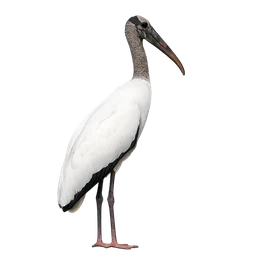
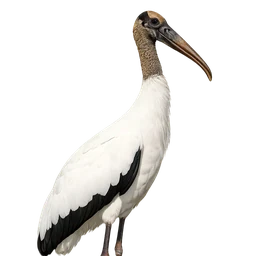
Profile
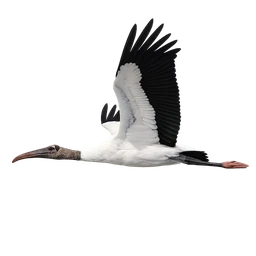
In flight
Cranes & Waders
Wood Stork
Mycteria americana
- uncommon
- 40 km/h
- Least Concern
The only stork that breeds in North America. Hunts by feel, snapping its bill shut in 25 milliseconds.
- Population
- 144,000-756,000 mature individuals globally (216,600-1,133,900 total individuals; Wetlands International 2023 estimate), per the current IUCN Red List assessment (2025, reassessed June 5 2025, assessment ID 281855989)
- Habitat
- Freshwater and brackish forested wetlands, swamps, and marshes with fluctuating water levels; nests colonially in trees (cypress, mangrove, oak, black gum) standing over water; forages in open wetlands with water 4-12 inches deep
- Fun fact
- On hot days, Wood Stork parents cool their nestlings by regurgitating water directly over them in the nest (Cornell Lab of Ornithology/All About Birds; corroborated by multiple independent sources).
- Range
- Southeastern United States (Florida, Georgia, South Carolina, North Carolina) south through Mexico and Central America, Cuba, and much of South America to northern Argentina; the only stork species that breeds in North America
- Diet
- Primarily fish (2-25 cm), located by tactile bill-groping in shallow water; also crustaceans (notably crabs), insects, frogs, and occasionally reptiles, nestlings, and seeds, with diet composition shifting seasonally between dry and wet seasons; adults require roughly 520 g of food daily
- Size
- 1 m
- Wingspan
- 1.6 m
- Lifespan
- 22 years