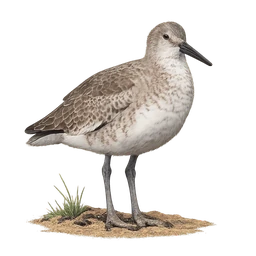
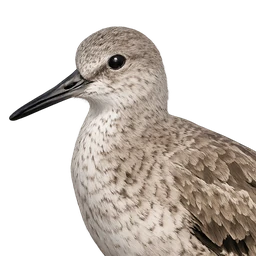
Profile
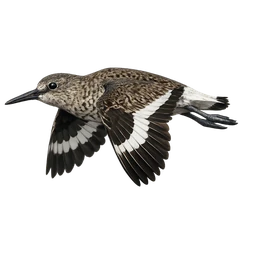
In flight
Cranes & Waders
Willet
Tringa semipalmata
- uncommon
- 40 km/h
- Least Concern
Plain gray on the ground, then explodes into a black-and-white wing flash. Two birds for the price of one.
- Population
- ~250,000 mature individuals (declining, ~10% decrease over three generations / ~18 years), per BirdLife International/IUCN 2024 assessment
- Habitat
- Salt marshes, tidal mudflats, mangroves, beaches, and rocky coastal shores during winter/non-breeding; the eastern subspecies breeds in Atlantic/Gulf Coast saltmarshes and barrier beaches, while the interior-breeding western subspecies uses freshwater prairie marshes, sloughs, potholes, and wet fields
- Fun fact
- Willets look plain gray-brown while standing, but in flight they flash a bold, unmistakable black-and-white wing stripe — and their name is onomatopoeic, echoing their loud "pill-will-willet" territorial call.
- Range
- Breeds across North America (Atlantic/Gulf Coast estuarine marshes and interior prairie wetlands from the Prairie Provinces to NE California/Colorado/Nebraska) and the West Indies; winters along Pacific and Atlantic/Gulf coasts from the southern U.S. through Central America, the Caribbean, and south to Chile/Argentina and Brazil
- Diet
- Aquatic invertebrates — fiddler and mole crabs, amphipods, worms, clams/mussels, aquatic insects and beetles — plus occasional small fish, spiders, or plant material; located largely by probing with the sensitive bill tip (allowing foraging by night as well as day) rather than by sight alone
- Size
- 0.38 m
- Wingspan
- 0.7 m
- Lifespan
- 10 years