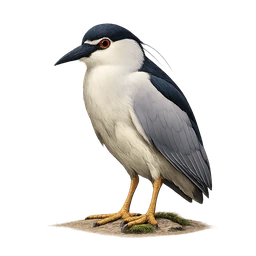
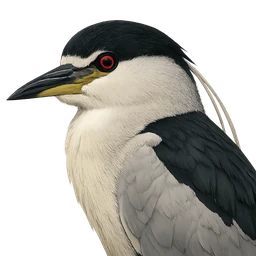
Profile
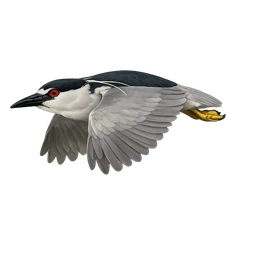
In flight
Cranes & Waders
Black-crowned Night-Heron
Nycticorax nycticorax
- uncommon
- 40 km/h
- Least Concern
Hunts from dusk till dawn while the day herons sleep. Your message arrives on the night shift.
- Population
- 440,000–1,990,000 mature individuals globally (2023 estimate, Wetlands International, via BirdLife/IUCN 2025 assessment)
- Habitat
- Freshwater, brackish, and saline wetlands — marshes, rivers, ponds, mangrove swamps, tidal flats, canals, and ricefields with aquatic vegetation; nests colonially in trees, bushes, or reedbeds near shallow water, often on islands or over water to avoid predators.
- Fun fact
- Black-crowned Night-Herons are among a small number of heron species (about seven) documented practicing "bait fishing," dropping edible or inedible objects onto the water's surface to lure fish within striking range — a rare example of tool use in birds.
- Range
- Cosmopolitan and one of the most widespread heron species: occurs across the Americas (southern Canada to Argentina/Chile, incl. Falkland Islands), Europe, Africa (incl. Madagascar), and Asia; absent as a breeder from Australia and Antarctica. Extremely large range (~290-296 million km² per BirdLife).
- Diet
- Opportunistic carnivore/omnivore: mainly small fish, plus crustaceans, mollusks, squid, leeches, earthworms, aquatic and terrestrial insects, frogs and other amphibians, lizards, snakes, small mammals, birds and eggs, carrion, and occasionally plant matter or refuse.
- Size
- 0.64 m
- Wingspan
- 1.15 m
- Lifespan
- 21 years