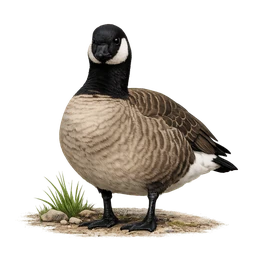
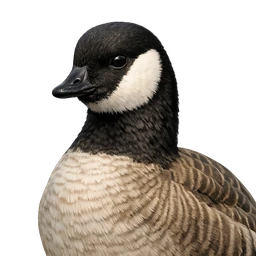
Profile
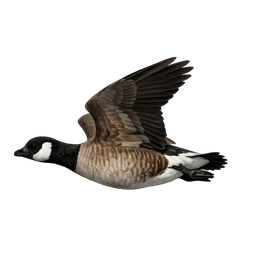
In flight
Waterfowl
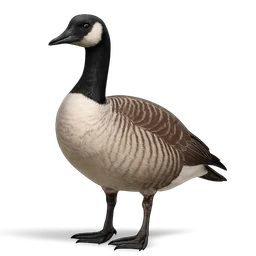
Cackling Goose
Branta hutchinsii
- common
- 56 km/h
- Starter
- Least Concern
Looks like a Canada Goose left in the dryer too long. Honks higher, flies in tighter flocks.
- Population
- ~4.5 million mature/breeding individuals (2020 est., Partners in Flight/BirdLife), increasing
- Habitat
- Breeds on subarctic/arctic tundra plains, ponds, steep grassy slopes and river valleys of Canada and Alaska; winters and stages on open, treeless habitats including freshwater marshes (notably permanent freshwater lakes over 8ha), saltmarshes, mudflats and agricultural fields
- Fun fact
- The Cackling Goose was only recognized as a species distinct from the Canada Goose in 2004 (AOU) / 2005 (BOU); the smallest subspecies (B. h. minima) weighs about a quarter as much as the largest Canada Goose subspecies. A banded male recovered in Oregon in 2010 was at least 22 years and 8 months old, among the oldest on record for the species.
- Range
- Breeds across tundra of northern Canada and Alaska; migrates through and winters across most of the continental United States, parts of western Canada, and into Mexico; introduced/reintroduced populations occur in the Kuril Islands and Russia with wintering birds reaching Japan; rare vagrant to Western Europe and East Asia (Kamchatka, East China)
- Diet
- Primarily herbivorous — grasses, sedges, rushes and berries on the breeding grounds; agricultural crops and waste grain (wheat, rye, oats, corn, rice, alfalfa, sorghum, barley, soy, clover) during migration and winter; also takes some insects, molluscs and crustaceans
- Size
- 0.64 m
- Wingspan
- 1.1 m
- Lifespan
- 22 years