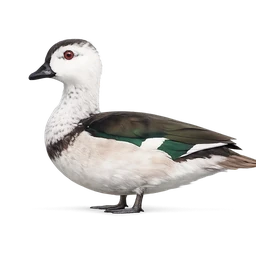
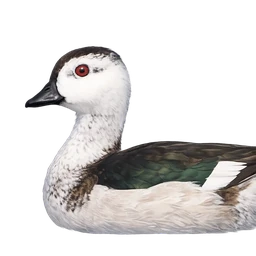
Profile
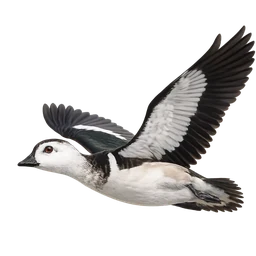
In flight
Waterfowl
Cotton Pygmy Goose
Nettapus coromandelianus
- uncommon
- 70 km/h
- Least Concern
One of the world's smallest waterfowl, nesting in tree hollows. A tiny duck that forgot it was supposed to stay in the water.
- Population
- Global estimate ~83,300–741,000 mature individuals (derived from ~125,002–1,111,000 total individuals; BirdLife/IUCN assessment, trend unknown)
- Habitat
- Freshwater wetlands up to ~800 m elevation: permanent rivers/streams, permanent freshwater lakes (>8 ha), and bogs/marshes/swamps/fens with floating or emergent vegetation (e.g. water lilies, hydrilla) — from small village ponds to large lagoons and dams; nests and roosts in tree hollows near water, generally not found in forest.
- Fun fact
- Despite its name, the Cotton Pygmy-goose is not a true goose but a small perching duck (genus Nettapus), and among the smallest waterfowl in the world — the smallest individuals weigh as little as 160 g and measure just 26 cm.
- Range
- Extremely wide range across 31 countries/territories in Asia and Oceania: from Afghanistan/Middle East through Pakistan, India, Bangladesh, China, Southeast Asia (e.g. Indonesia, Thailand) to New Guinea and northern/eastern Australia (subspecies N. c. albipennis, marginally larger); nominate N. c. coromandelianus occupies India/Asia to New Guinea. A full migrant in parts of its range, with non-breeding/vagrant records reaching the Arabian Peninsula and Jordan.
- Diet
- Omnivorous dabbler: mainly aquatic vegetation (hydrilla, pondweed, Ruppia, Ipomoea) plus small fish (e.g. Puntius, Mystus, Oryzias), molluscs, crustaceans and aquatic insect larvae; feeds by dabbling and surface-picking, does not dive.
- Size
- 0.33 m