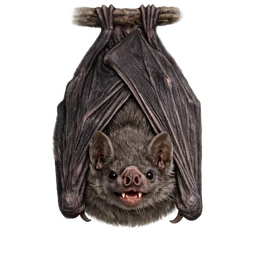
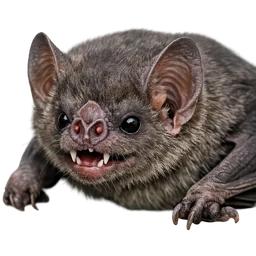
Profile
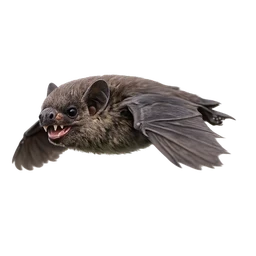
In flight
Bats
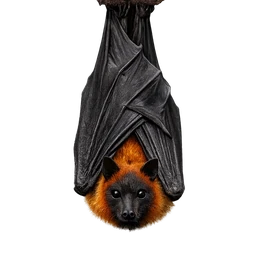
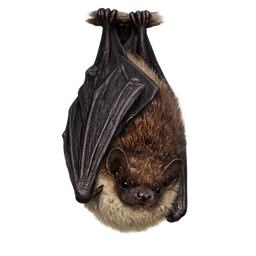
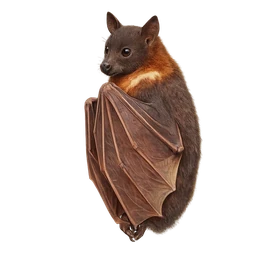
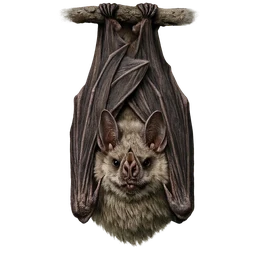
Common Vampire Bat
Desmodus rotundus
- rare
- 35 km/h
- Least Concern
Drinks blood, shares meals with hungry roost mates, and walks on the ground to sneak up on prey.
- Population
- No numeric global population estimate is published by IUCN; the species is described as widespread and common, with populations presumed stable-to-increasing in many areas due to abundant livestock as a blood-meal source (localized declines occur where culling/vampire-control programs target roosts)
- Habitat
- Warm tropical and subtropical lowland to mid-elevation habitats (up to roughly 2,400 m), including woodlands, savannas, and agricultural/pastoral land near livestock; roosts communally (commonly 20-100 individuals, occasionally into the thousands) in caves, hollow trees, wells, mine shafts, and abandoned buildings
- Fun fact
- Common vampire bats practice reciprocal food-sharing — regurgitating blood meals to roost-mates (often kin, but also unrelated bats with an established social bond) that failed to feed that night — a textbook example of reciprocal altruism documented in decades of field studies by Gerald Wilkinson and others.
- Range
- Mexico (northern limit near the US border in extreme south Texas historically reported, though established range is generally cited from Mexico southward) through Central America and most of South America to Uruguay, northern Argentina, and central Chile; also present on Trinidad, Margarita Island, and other continental-shelf Caribbean islands
- Diet
- Obligate sanguivore (blood only); feeds preferentially on livestock (cattle, horses, pigs) due to their abundance and accessibility, but also takes wild mammals, birds, and occasionally humans; makes a shallow bite with razor-sharp incisors and laps the flowing blood, aided by an anticoagulant (draculin) in its saliva
- Size
- 0.08 m
- Wingspan
- 0.375 m
- Lifespan
- 12 years