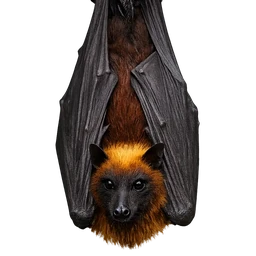
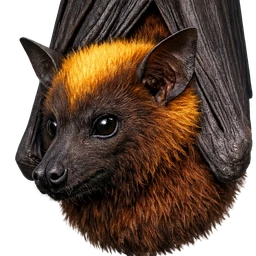
Profile
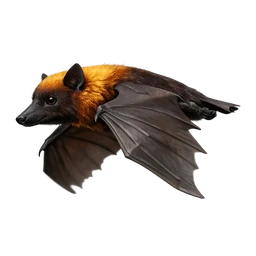
In flight
Bats
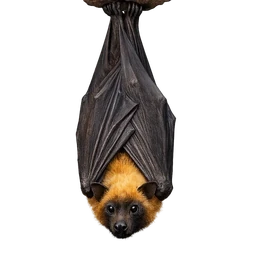
Giant Golden-crowned Flying Fox
Acerodon jubatus
- mythic
- 45 km/h
- Endangered
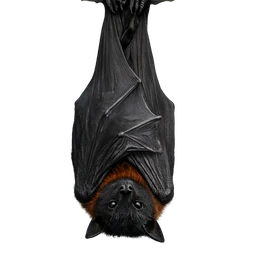
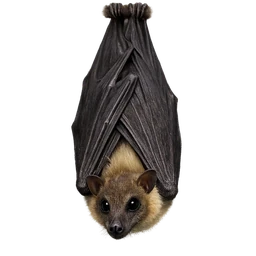
The world's largest bat, with a 5.5-foot wingspan. Eats figs, disperses seeds no other animal can carry.
- Population
- Roughly 10,000-20,000 individuals estimated, having declined about 50% over the past 30 years and still declining; largest known colonies now number only a few thousand versus 100,000-150,000 in mixed colonies in the early 20th century
- Habitat
- Lowland primary and high-quality secondary tropical forest, roosting in tall trees on cliffs, small offshore islands, mangroves, and bamboo stands from sea level to about 1,100 m elevation
- Fun fact
- One of the largest bats in the world by weight (up to about 1.4 kg) and wingspan (up to 1.7 m) — its forearm (~21 cm) is the longest of any bat species — yet it has no echolocation ability at all and navigates entirely by sight and smell, sometimes commuting over 12-16 km between roosts and foraging sites, often roosting in mixed colonies alongside the large flying fox (Pteropus vampyrus).
- Range
- Endemic to the Philippines; found on Luzon, Mindanao, Mindoro, Negros, Cebu, Bohol, Leyte, Boracay, and Polillo (extirpated from Panay; absent from Palawan, Batanes, and Babuyan)
- Diet
- Strict frugivore, feeding heavily on figs (Ficus spp., roughly 40-80% of diet depending on source) supplemented with other fruit (e.g. banyan, Ficus variegata) and some leaves (liquid extracted, pulp discarded)
- Size
- 0.29 m
- Wingspan
- 1.6 m
- Lifespan
- 30 years