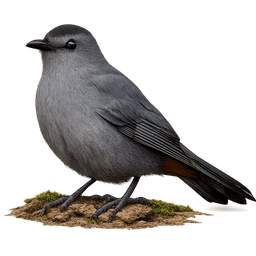
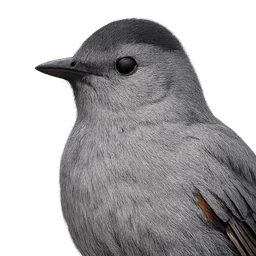
Profile
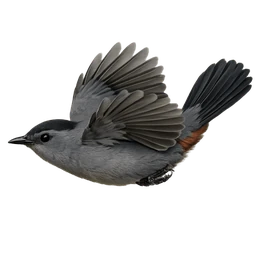
In flight
Songbirds
Gray Catbird
Dumetella carolinensis
- rare
- 55 km/h
- Least Concern
Mews like an actual cat hiding in the bushes. Mimics, mutters, and gets the message across.
- Population
- ~29 million (global breeding population, Partners in Flight, cited in IUCN assessment)
- Habitat
- Dense tangled thickets, vine tangles, shrubby forest edges, overgrown fields/farmland, hedgerows, fencerows, and suburban/urban gardens with dense low vegetation; avoids unbroken dense woodland and coniferous forest; winters in denser forested/berry-rich thickets in the tropics
- Fun fact
- The Gray Catbird gets its name from its cat-like mewing call, and thanks to a well-developed songbird syrinx it can produce two different sounds simultaneously and mimic other birds, tree frogs, and mechanical sounds.
- Range
- Breeds across temperate North America east of the Rocky Mountains (southern Canada through the eastern/central US); winters in the southeastern US, Mexico, Central America, and the Caribbean, staying east of the Cordillera (rare vagrants excepted); a historically common but now much-reduced resident population occurs in Bermuda
- Diet
- Omnivorous — roughly half fruit/berries (elderberries, holly, blackberries, cherries, poison ivy, bay berries) and half arthropods (beetles, ants, caterpillars, grasshoppers, moths, earthworms); occasionally pecks/eats other birds' eggs
- Size
- 0.225 m
- Wingspan
- 0.26 m
- Lifespan
- 17.9 years