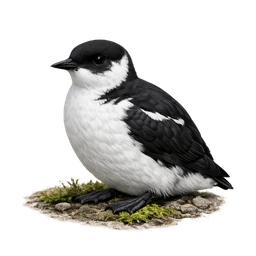
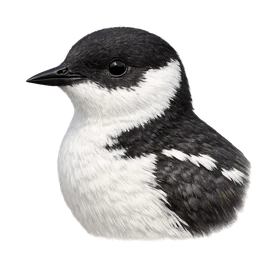
Profile
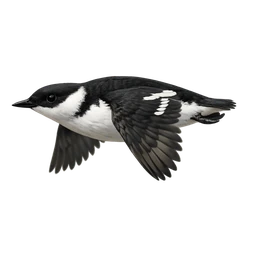
In flight
Seabirds
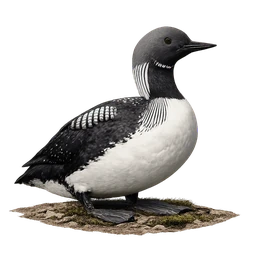
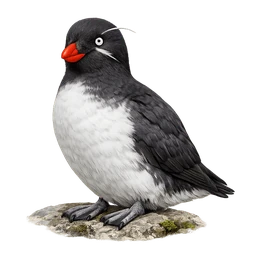
Marbled Murrelet
Brachyramphus marmoratus
- rare
- 55 km/h
- Endangered
Nests in mossy old-growth branches up to 50 miles inland. Took ornithologists until 1974 to find the first nest.
- Population
- ~240,000-280,000 mature individuals (BirdLife/IUCN, 2020 assessment), declining; historical estimates were higher (~350,000-420,000)
- Habitat
- A seabird that breeds in old-growth and mature coniferous forest near the coast (nesting on moss-covered limbs of large trees, generally within about 50 km/80 km of shore) and forages at sea in nearshore coastal waters, bays, and saltwater passages, usually close inshore (typically within a few km of shore, in waters under ~30 m/100 ft deep).
- Fun fact
- Unlike almost every other seabird in the auk family, which nests in cliffside colonies, the Marbled Murrelet nests solitarily far inland high in old-growth conifers, laying its single egg on a wide, moss-covered branch — a nesting habit that went undocumented by science until 1974.
- Range
- North Pacific coast from the Aleutian Islands/Bristol Bay and southern Alaska (Kenai Peninsula) south through British Columbia, Washington, and Oregon to central California (Point Sal, Santa Barbara County); largely resident/non-migratory, with some southern populations continuing to decline sharply.
- Diet
- Small forage fish (sand lance, Pacific herring, capelin, anchovy, sardines, shiner perch) and invertebrates such as krill and other crustaceans, caught by diving and "flying" underwater with its wings, sometimes to depths of ~90 ft (27 m).
- Size
- 0.26 m
- Wingspan
- 0.46 m
- Lifespan
- 10 years