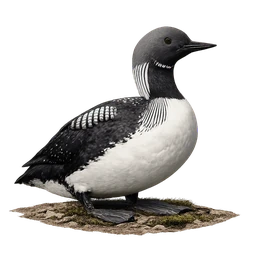
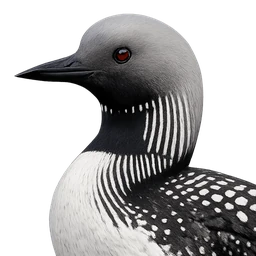
Profile
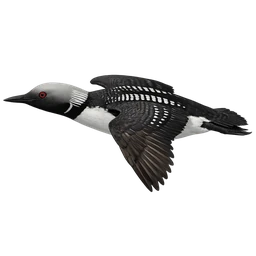
In flight
Seabirds
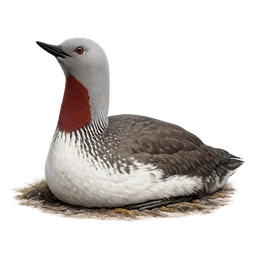
Pacific Loon
Gavia pacifica
- rare
- 84 km/h
- Least Concern
Silver-gray nape, immaculate striped collar. Stages by the thousands off the coast in winter.
- Population
- roughly 930,000-1,600,000 mature individuals globally, increasing
- Habitat
- Breeds on freshwater tundra and taiga lakes in the Arctic (nests set directly on the shoreline or on islands, requiring lakes large enough for open-water takeoff/landing); winters mainly in coastal marine waters (channels, straits, bays, estuaries, nearshore ocean) along the Pacific coast
- Fun fact
- Pacific Loons need a long open-water runway of roughly 30-50 yards (about 27-46 m) to become airborne, which restricts them to larger lakes for breeding and makes them essentially unable to take off from land.
- Range
- Breeds across Arctic Canada, Alaska, and eastern Siberia; migrates along the Pacific coast to winter from the Aleutians and Gulf of Alaska south to Baja California and Mexico, with smaller numbers wintering along the Pacific coast of Asia down to eastern China, Japan, and Korea
- Diet
- Primarily small fish caught by underwater pursuit-diving (e.g., Pacific herring, shiner perch, surfperches, Pacific sandlance, northern anchovy, medusafish in winter); also takes aquatic invertebrates such as snails, mollusks, insect larvae, and zooplankton on the breeding grounds
- Size
- 0.66 m
- Wingspan
- 1.19 m
- Lifespan
- 20 years