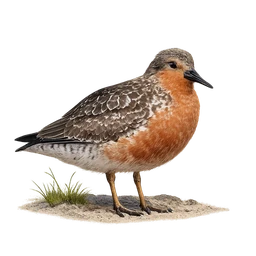
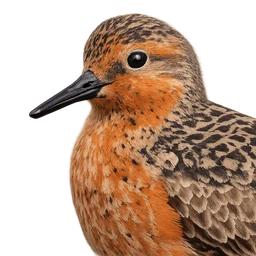
Profile
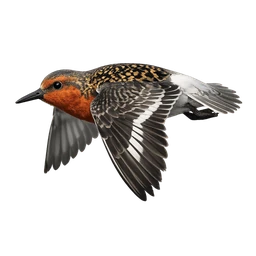
In flight
Cranes & Waders
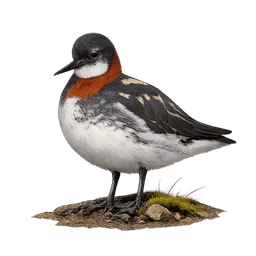
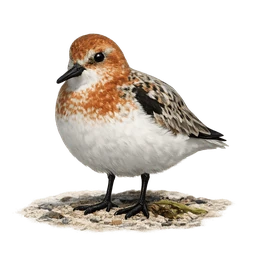
Red Knot
Calidris canutus
- uncommon
- 40 km/h
- Near Threatened
Migrates 9,000 miles each way fueled by horseshoe crab eggs. Your message rides one of the longest commutes alive.
- Population
- estimated 891,000-979,000 mature individuals globally (~900,000, per Wetlands International data cited in the 2018 IUCN/BirdLife assessment), declining at roughly 25% over three generations
- Habitat
- Breeds on high Arctic tundra and Arctic Cordillera; non-breeding/migration habitat is coastal mudflats, tidal flats, sandy beaches, and estuaries worldwide
- Fun fact
- Red Knots time their northbound migration to a precise stopover at Delaware Bay to gorge on horseshoe crab eggs, refueling for the final Arctic-bound leg of a round-trip migration that can exceed 14,000 miles a year.
- Range
- Circumpolar Arctic breeder (Alaska across the Arctic to Greenland and northern Russia); six subspecies migrate to winter along coastlines nearly worldwide, from northwestern Europe and West Africa to southern South America (Tierra del Fuego), and Australia/New Zealand
- Diet
- Arthropods, insect larvae, and some plant material on Arctic breeding grounds; hard-shelled marine invertebrates (bivalves, mussels, gastropods, small crabs, marine worms) during migration and winter, notably gorging on horseshoe crab eggs at Delaware Bay stopovers, which support an estimated 50-80% of migrating C. c. rufa each spring
- Size
- 0.25 m
- Wingspan
- 0.5 m
- Lifespan
- 27 years