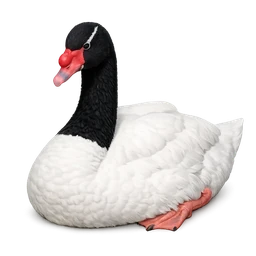
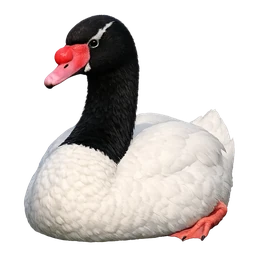
Profile
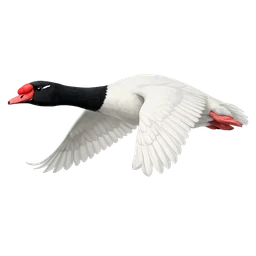
In flight
Waterfowl
Black-necked Swan
Cygnus melancoryphus
- rare
- 60 km/h
- Least Concern
The only swan with a black neck. Carries its cygnets on its back while swimming through Patagonian wetlands.
- Population
- 17,300–67,900 mature individuals, stable trend
- Habitat
- Freshwater marshes, swamps, permanent freshwater lakes, shallow lakes, bogs/peatlands, and brackish/saline coastal lagoons and sheltered coastal sites; typically at low elevations (0–1,250 m), with non-breeding flocks occasionally reaching 900–1,250 m in the southern Andes
- Fun fact
- The Black-necked Swan is the only swan species with a fully black neck contrasting against a pure white body, is the largest waterfowl native to South America and the only swan that breeds in the neotropics, and males often carry cygnets on their backs shortly after hatching.
- Range
- Southern South America — breeds from Tierra del Fuego north through Chile, Argentina, Uruguay, and Rio Grande do Sul in southern Brazil, plus the Falkland Islands; non-breeding/winter range extends further north (recorded as far as São Paulo state, Brazil), with vagrants recorded as far as Antarctica
- Diet
- Primarily aquatic vegetation (e.g. Chara/stoneworts, Potamogeton/pondweeds, Typha, milfoil, Egeria densa) and algae, obtained by head/neck immersion, surface feeding, and upending, using horny bill serrations to filter food; largely herbivorous but occasionally takes small invertebrates, insects, and rarely fish or frog spawn
- Size
- 1.13 m
- Wingspan
- 1.56 m
- Lifespan
- 20 years