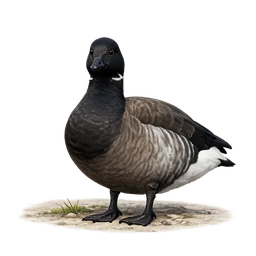
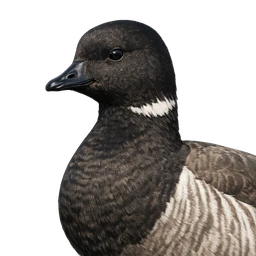
Profile
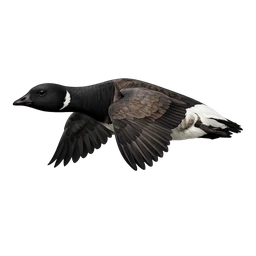
In flight
Waterfowl
Brant
Branta bernicla
- common
- 28 km/h
- Starter
- Least Concern
Small sea goose that feeds almost entirely on eelgrass. Your message rides the salt-marsh shift.
- Population
- ~490,000 mature individuals globally (BirdLife International for IUCN, 2021 assessment, independently re-confirmed via live DataZone fetch); Wikipedia/Cornell cite a broader ~400,000-625,000 total-bird figure across three subspecies (includes immatures, wider methodology) — directionally consistent, not identical metric
- Habitat
- Breeds on low-lying wet Arctic coastal tundra and wetlands thick with grasses and sedges; winters in coastal estuaries, salt-marsh lagoons, bays, and sounds, favoring eelgrass beds exposed at low tide, with increasing use of agricultural/upland fields and (in parts of the US East Coast) golf courses
- Fun fact
- The Brent oilfield in the North Sea was named after this goose, and in County Kerry, Ireland, it was historically permissible for Catholics to eat the bird on Fridays because folklore (tied to the barnacle-goose myth) classified it as a kind of fish.
- Range
- Circumpolar Arctic breeder across the Russian Arctic, northern Canada, Alaska, and Greenland; winters along temperate coasts of western Europe (where known as the Brent Goose), eastern Asia, and both the Atlantic and Pacific coasts of North America, in three recognized subspecies
- Diet
- Almost exclusively herbivorous: eelgrass, sea lettuce and other algae, salt-marsh plants, sedges, grasses, and mosses on the breeding grounds; increasingly grazes on grasses in cultivated/developed areas since a 1931 eelgrass blight forced a lasting dietary shift toward sea lettuce and uplands
- Size
- 0.61 m
- Wingspan
- 1.13 m
- Lifespan
- 28 years