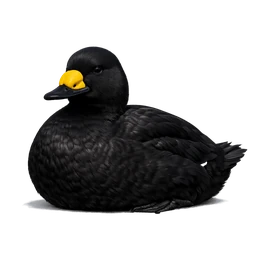
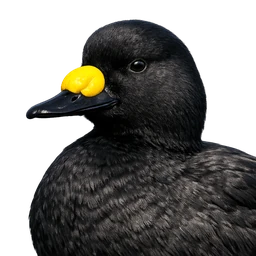
Profile
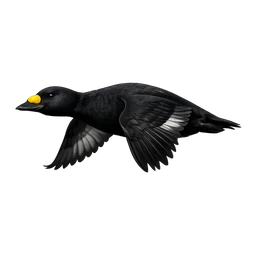
In flight
Waterfowl
Black Scoter
Melanitta americana
- uncommon
- 40 km/h
- Near Threatened
The only all-black duck in North America. Drakes whistle a plaintive 'cour-loo' on the breeding grounds.
- Population
- ~900,000 breeding individuals globally (Partners in Flight estimate, cited by Cornell Lab/All About Birds); note IUCN's own Red List assessment separately estimates 350,000-560,000 mature individuals — different source/methodology, both legitimate; overall population trend is decreasing (IUCN assessment: suspected 20-29% decline over ~16 years / three generations; Cornell: >50% loss over past 50 years but recent trend more stable, "Yellow Alert Tipping Point" species)
- Habitat
- Breeds on shallow, rocky-bottomed freshwater lakes and rivers in northern boreal forest/woodland and tundra; winters in nearshore marine and estuarine waters, especially sheltered, shallow coastal embayments with rocky or sandy bottoms rich in shellfish (mussels)
- Fun fact
- Male Black Scoters perform a distinctive courtship display that, unlike other scoters, almost always ends with a sharp downward thrust of the head.
- Range
- Breeds in far northern North America (Alaska, northern Canada including Labrador/Newfoundland/Hudson Bay) and northeastern Siberia east of the Yana River; winters along the Atlantic coast from Newfoundland/northern US to the Gulf of Mexico, the Pacific coast from Alaska/Canada to San Francisco Bay, and coastal East Asia (Japan, Korea, China)
- Diet
- Winters mainly on mollusks (mussels, clams) and crustaceans taken by diving, with some marine vegetation (eelgrass); breeding-season diet shifts to aquatic insects and larvae (caddisflies, mayflies, beetles), small mollusks/crustaceans, fish eggs, and some aquatic vegetation (pondweed, duckweed)
- Size
- 0.46 m
- Wingspan
- 0.71 m
- Lifespan
- 10.5 years