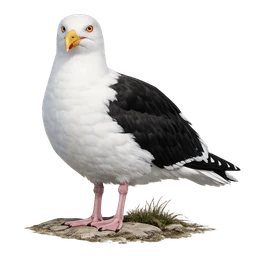
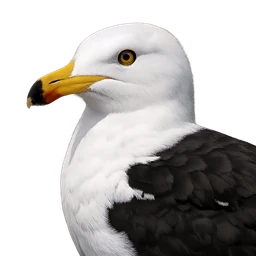
Profile
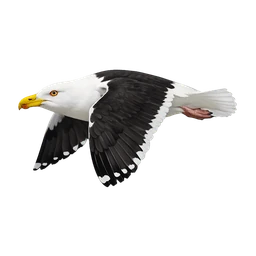
In flight
Seabirds
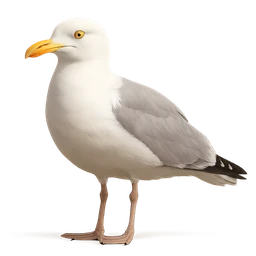
Great Black-backed Gull
Larus marinus
- rare
- 84 km/h
- Least Concern
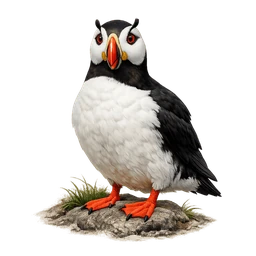
The world's largest gull. Swallows puffins whole and bullies everything on the beach.
- Population
- Global breeding population roughly 152,000-165,000 pairs as of 2021, down from ~291,000 pairs in 1985 (a 43-48% decline over ~3 generations, per Perkins et al. 2022, Bird Conservation International)
- Habitat
- Coastal rocky and sandy shores, estuaries, inland lakes, ponds, rivers, and wetlands; breeds on islands and cliff stacks, increasingly on urban rooftops, refuse dumps, and dredge-spoil islands
- Fun fact
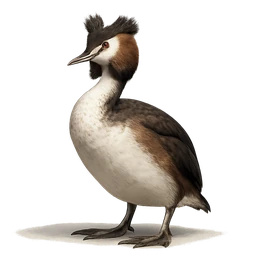
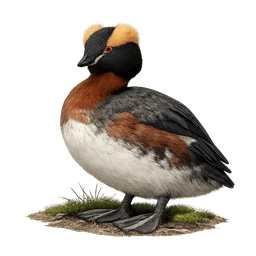
- The Great Black-backed Gull is the world's largest gull species and is powerful enough to hunt and kill adult seabirds as large as puffins and grebes.
- Range
- North Atlantic: breeds from northwest Russia through Scandinavia, France, the UK, Ireland, Iceland, the Faroe Islands, and southern Greenland to the North American Atlantic coast (Canada south to the northeastern/mid-Atlantic US); northern populations migrate south in winter (occasionally as far as Florida/Caribbean), southern populations largely sedentary
- Diet
- Highly opportunistic omnivore/predator - fish (capelin, cod, herring), crustaceans, mollusks, echinoderms, marine invertebrates, seabirds, eggs and nestlings, plus carrion, refuse, and food stolen from other birds
- Size
- 0.715 m
- Wingspan
- 1.6 m
- Lifespan
- 27 years