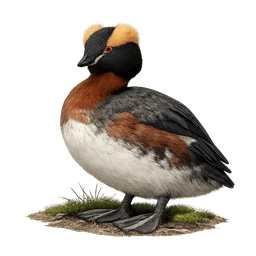
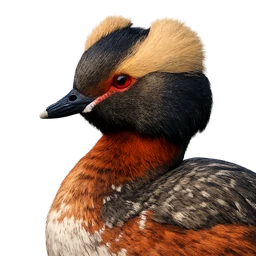
Profile
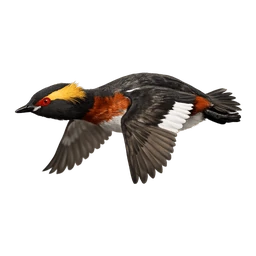
In flight
Seabirds
Horned Grebe
Podiceps auritus
- rare
- 55 km/h
- Vulnerable
Golden 'horns' fan out from a black head in breeding plumage. Looks like a tiny Cretaceous fashion statement.
- Population
- c. 239,000-583,000 individuals globally (Wetlands International 2012 estimate, as carried in BirdLife International's DataZone factsheet); regionally breaks down roughly as ~200,000-500,000 in North America plus ~12,900-18,500 mature individuals in Eurasia per Wikipedia's cited figures, consistent with the global total
- Habitat
- Breeds on small to moderate shallow freshwater lakes and ponds with emergent vegetation (rushes, sedges, reeds) in boreal/subarctic and prairie zones; winters on sheltered marine coastal waters such as estuaries and protected bays, occasionally on large freshwater lakes or (during severe weather) mistakenly landing on wet roads/parking lots
- Fun fact
- Like other grebes, the Horned Grebe deliberately eats its own feathers from a young age (and feeds them to its chicks), forming a matted plug in the stomach that filters and traps sharp fish bones until they can be safely digested or regurgitated.
- Range
- Holarctic breeding distribution: subarctic Canada, Alaska, and the northern-tier US/Canadian prairie provinces (P. a. cornutus), plus Iceland across northern Europe and Asia to the Russian Far East (P. a. auritus, "Slavonian Grebe"); winters along both North American coasts (Pacific and Atlantic), the southeastern US, and coastal western Europe/Mediterranean/Eurasian wintering grounds
- Diet
- Small fish, aquatic insects and their larvae, crustaceans (including amphipods), leeches, tadpoles/salamanders, occasional mollusks and plant material, and some airborne insects taken off the water surface; summer diet emphasizes aquatic arthropods, shifting toward small fish and marine crustaceans in winter
- Size
- 0.34 m
- Wingspan
- 0.62 m
- Lifespan
- 9 years