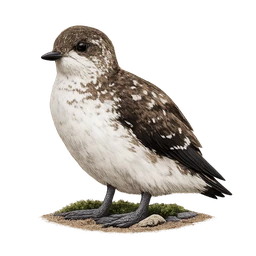
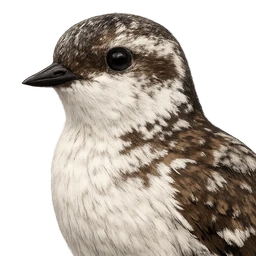
Profile
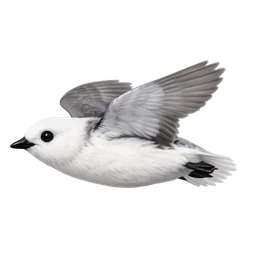
In flight
Seabirds
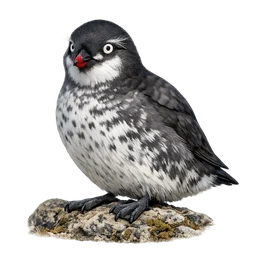
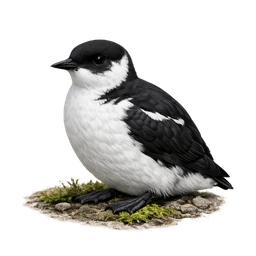
Kittlitz's Murrelet
Brachyramphus brevirostris
- rare
- 55 km/h
- Near Threatened
Nests on bare scree above retreating glaciers. Your message rides the climate front line.
- Population
- roughly 32,000–55,000 mature individuals (≈48,000–82,000 total birds accounting for those not counted), decreasing
- Habitat
- Cold coastal marine waters near tidewater glaciers and ice floes, including turbid glacial-outflow waters, calm protected bays, sandy-mud substrates, rocky reefs and kelp beds; nests solitarily on bare, unvegetated alpine ground — steep rocky/scree slopes near mountain tops in glaciated regions, often 1,000–3,000+ ft above sea level and well inland from the coast, near snowfields
- Fun fact
- Unlike almost every other alcid, which nests colonially on sea cliffs, Kittlitz's Murrelet nests solitarily on bare alpine scree far from the ocean, sometimes many kilometers inland and thousands of feet up, near retreating glaciers — chicks even retain their down until roughly 12 hours before fledging and then receive no further parental care.
- Range
- Bering Sea region: coastal Alaska (from just east of Cape Lisburne south through the Aleutian Islands, Alaska Peninsula, Kodiak Island, Kenai Peninsula, Prince William Sound to LeConte Bay/Glacier Bay in the southeast — roughly 70% of the global population) and the coasts of eastern Siberia (Chukotskiy Peninsula, Shelikov Bay/Sea of Okhotsk); an extremely rare vagrant farther south along the Pacific coast
- Diet
- Small forage fish (larval/juvenile fish) and macro-zooplankton such as krill and other small crustaceans, caught by diving and "flying" underwater; its shorter bill than the related Marbled Murrelet suggests a somewhat different, less fish-heavy diet
- Size
- 0.25 m
- Wingspan
- 0.46 m
- Lifespan
- 14 years