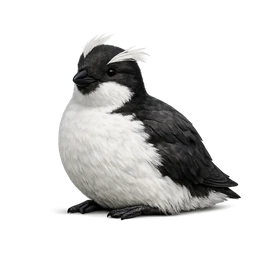
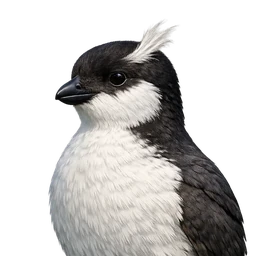
Profile
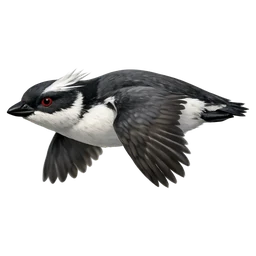
In flight
Seabirds
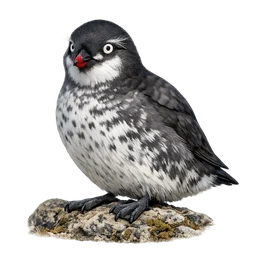
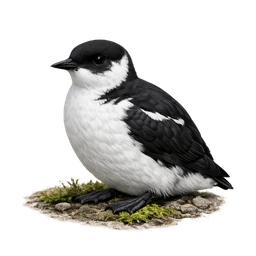
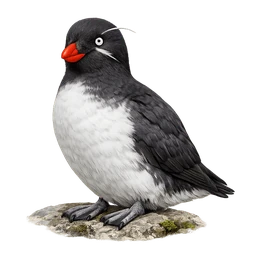
Japanese Murrelet
Synthliboramphus wumizusume
- epic
- 50 km/h
- Vulnerable
Chicks leave the nest within 2 days of hatching and swim straight out to sea. No hesitation, no forwarding address.
- Population
- 5,200–9,400 mature individuals (from an estimated 2,600–4,700 breeding pairs recorded by 2015), declining
- Habitat
- Remote rocky coasts and offshore/pelagic waters of the northwest Pacific (boreo-cool to subtropical); breeds colonially and singly on small uninhabited rocky islets and headlands, nesting in rock crevices, stone gaps, and island grassland burrows, typically 15–60 m above sea level
- Fun fact
- Chicks are precocial and leap from their nest crevice into the sea on their second night after hatching, without ever being fed in the nest, calling back and forth with their parents to reunite in the dark surf.
- Range
- Breeds on small islands off Japan from Nanatsujima, Ishikawa Prefecture in the north to Tori-shima in the Izu Islands in the south (chief colonies: Birōjima, Miyazaki Pref.; the Izu Islands; Mimiana I., Mie Pref.; Kōshima, Kōchi Pref.), with a single documented breeding record off South Korea's south coast and possible breeding in Russia's Peter the Great Bay; after breeding, disperses along Honshū/Kyūshū and north to Sakhalin, the Southern Kuriles, and Primorsky Krai (incl. Peter the Great and Olga Bays), and south/west occasionally to South Korea, Taiwan, and Fujian, China
- Diet
- Mostly krill and other planktonic crustaceans (especially euphausiids) plus crangonid shrimp, supplemented with small/larval pelagic fish such as sand eels, sandlances, herring, sculpin, and smelt, taken in shallow V-shaped dives
- Size
- 0.25 m
- Wingspan
- 0.43 m
- Lifespan
- 10 years