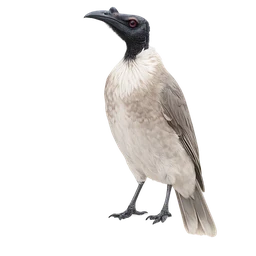
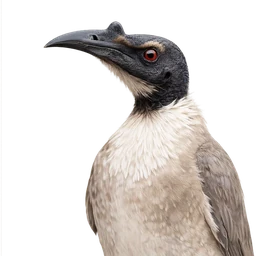
Profile
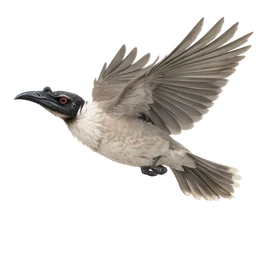
In flight
Songbirds
Noisy Friarbird
Philemon corniculatus
- uncommon
- 36 km/h
- Least Concern
Bald black head, horn on its bill, and a call that sounds like a very opinionated drunk uncle. Beloved anyway.
- Population
- Population size not quantified; described by BirdLife International (2025 assessment) as "fairly common to very common" throughout its range, but with a suspected decreasing trend (1-19% decline over three generations, driven by ~47.5% tree-cover loss within its mapped range); Extent of Occurrence ~2,640,000 km². (Corrects first-pass claim of a "stable" trend — current BirdLife/IUCN assessment states decreasing.)
- Habitat
- Dry forests, eucalypt woodlands, coastal scrub, heathlands, wetland margins and wetter forest edges; also uses urban areas, gardens, and arable/agricultural land; elevation range 0-1,650 m
- Fun fact
- The Noisy Friarbird gets its name from its raucous, cackling calls — often rendered as "four o'clock" or "tobacco" — which large feeding flocks produce loudly enough to fill an entire forest with sound; it also sports a bare black head with a distinctive bony knob (casque) at the base of its bill.
- Range
- Eastern Australia (from around Lakes Entrance/Murray Valley in Victoria north through New South Wales and Queensland to Cape York) and the Trans-Fly region of southern New Guinea (Indonesia/Papua New Guinea)
- Diet
- Nectar, fruit, and insects/invertebrates; occasionally eggs or nestlings of other birds; sometimes raids commercial grapes and berries; typically forages high in trees, often in noisy mixed-honeyeater flocks
- Size
- 0.34 m
- Lifespan
- 8 years